


Near-Infrared (NIR) spectroscopy has revolutionized food quality testing by providing a fast, accurate, and non-destructive method to analyze food composition. In contrast to traditional laboratory techniques, which are often time-consuming and require chemical reagents, NIR spectroscopy enables rapid testing on raw materials or final products. To understand its value, it is essential to look at how NIR spectroscopy works in food quality testing.

The Basic Working Principle of NIR Spectroscopy
NIR spectroscopy is performed in the near-infrared portion within the electromagnetic spectrum (780-2500 in nanometers). In this area molecules absorb light caused by vibrations caused by chemical bonds especially hydrogen molecules (O-H C-H, OH and N-H bonds). These vibrations are closely linked to the key components of food like protein, fats, water and carbohydrates.
When near-infrared light beams towards a food item it is observed that a portion that light gets absorbed and the remainder is reflected, or transmitted. The absorption pattern generates an array of spectrums that represent the molecular makeup of the food.

The Measurement Process of NIR Spectroscopy for Rapid Food Quality Testing
To fully understand its effectiveness, it is important to explore how the measurement process works in NIR spectroscopy for food quality testing.
1. Generation of NIR Light
The process starts with the spectrometer producing near-infrared light that is typically in the 780-2500 nanometers. This light is directed at the food item and the interaction of the substance forms the basis to the measurements.
2. Interactions of NIR Light with Food Components
When NIR light reflects off the food and the food’s molecules absorb certain wavelengths of light, based on its chemical bond.
| Food Component | Key Chemical Bonds Detected | NIR Absorption Features | Quality Parameters Measured |
| Water | O-H bonds | Absorption is strong, peaking around 1450 nm, and 1940 nm | Moisture content, freshness, shelf life |
| Proteins | C-H and N-H bonds | Absorption in 2050-2180nm and 2300-2400 nm spectrums | Protein content, nutritional value, product grading |
| Fats & Oils | C-H bonds | Absorption characteristics near 1720 nm to 2300 nm | Fat concentration, composition of fatty acids Adulteration detection |
| Carbohydrates | Bonds for C-H and O-H | Absorption at 1450 nm and 2100-2300 nm | Sugar levels (Brix value), starch content, ripeness |
| Fiber & Cellulose | O-H and CH bonds | Broad absorptions in the 2000-2000 in the nm region | Textural properties, fiber content high quality of cereals and grains |
3. Detection of Transmitted or Reflected Light
Some light is not absorbent. A portion of it is reflected off the surface or passed through the sample dependent on the physical state of the sample. Foods that are powdered or solid typically employ reflectance measurements. liquids use transmission, while fruits and vegetables typically employ interactivity, which is a combination of both methods. The detector captures the light and transforms it into a measured signal.
4. Conversion into a Spectrum
The signal that is captured is converted into a spectrum that illustrates the intensity of the absorbent light at various wavelengths. The spectrum is full of information, however as a whole it’s too complicated to interpret in a straightforward manner.
5. Chemometric Data Analysis
To gain useful data, chemometric models are used to analyze the spectrum. These statistical and mathematical tools evaluate the measured spectra against calibrated datasets that have been established, which allow for precise prediction of quality parameters, such as moisture levels, protein percentage and sugar content. Modern methods increasingly rely on machine learning to increase the accuracy of predictions across a variety of different types of food.
6. Output of Results
The last step is to present the results in a format that is user-friendly. Instead of displaying raw spectra, the system provides clear results for various parameters such as moisture, fat, and protein, allowing food manufacturers to quickly make decisions regarding quality, safety, as well as conformance. The rapid change transforms NIR spectroscopy into an effective instrument for the laboratory and on-line food testing.

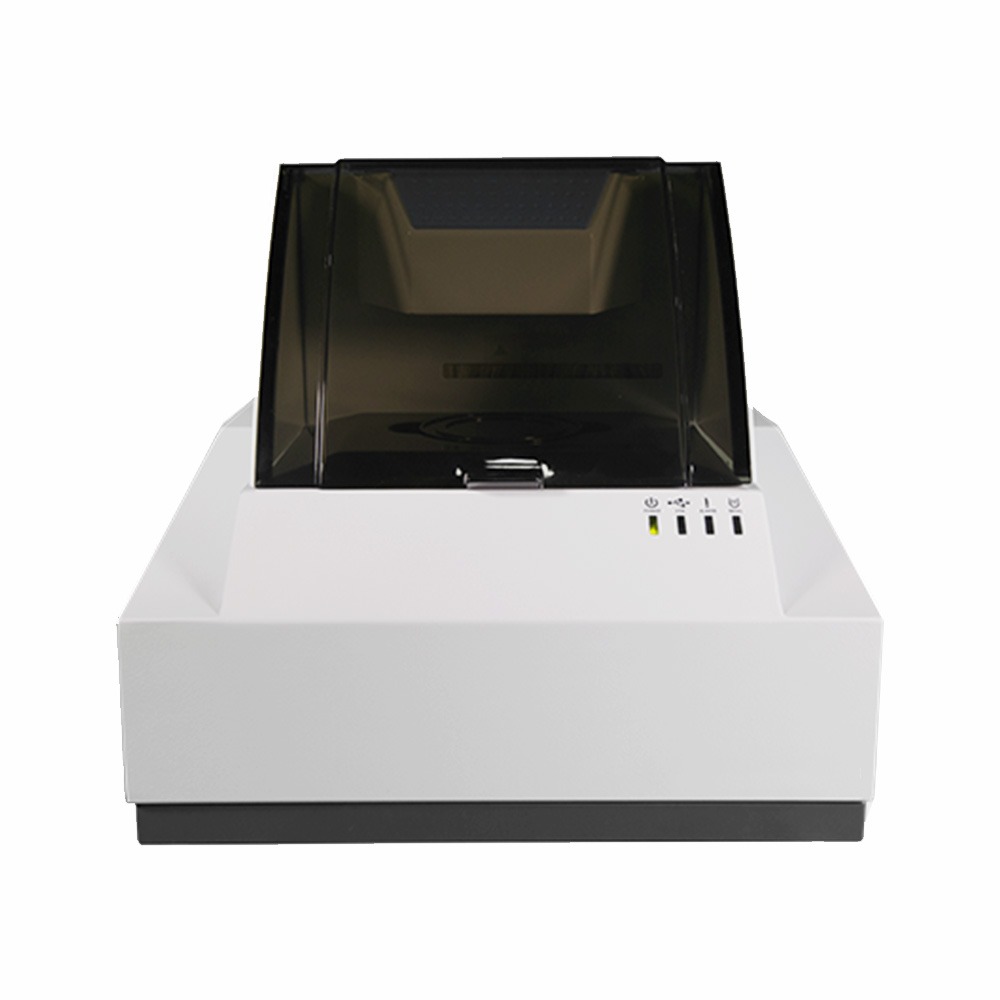
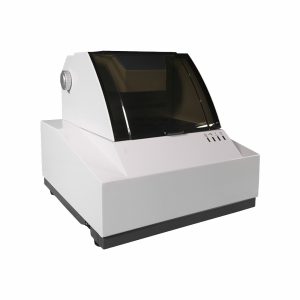
DW-S430 NIR Spectrophotometer


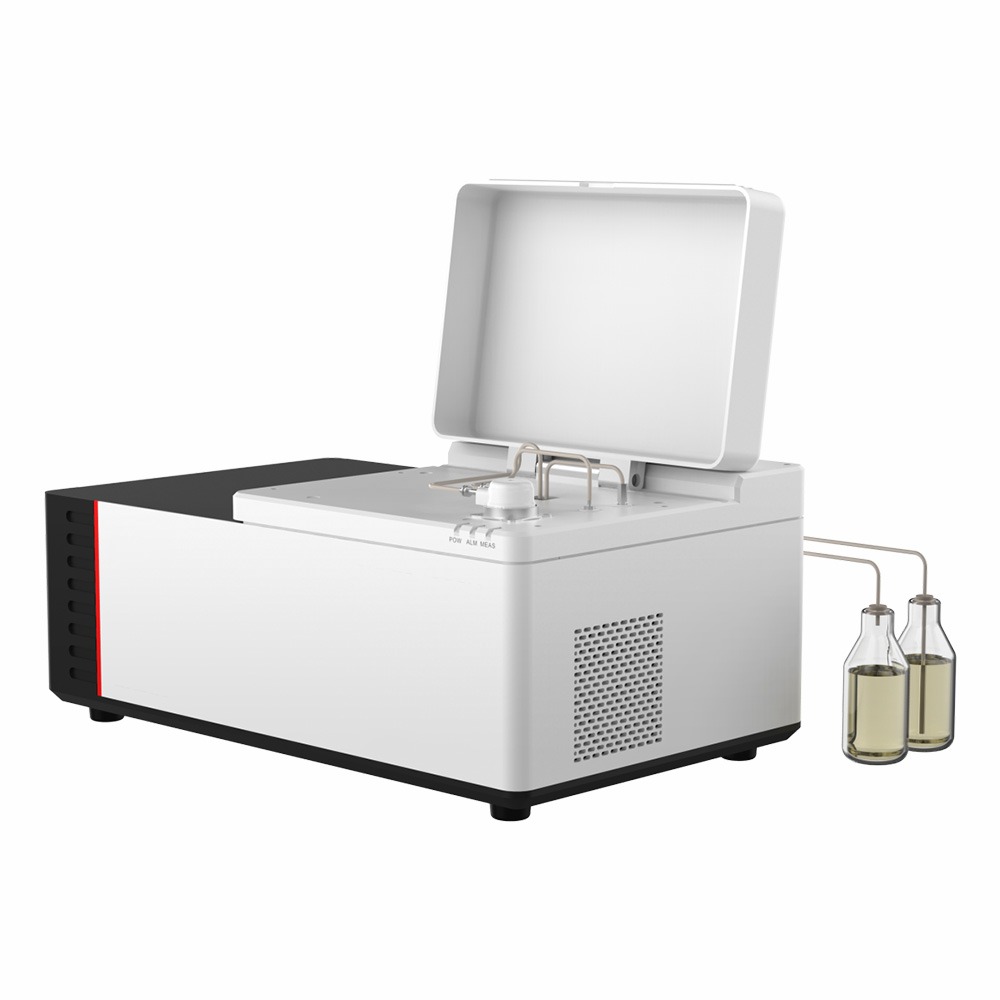
DW-S460 NIR Spectrometer
Types of NIR Spectroscopy Techniques
| Technique | How It Works | Suitable Sample Types | Applications in Food Quality Testing |
| Diffuse Reflectance | NIR light is directed to the surface, and the reflection light is assessed. | Solids, powders, grains, flour | Protein, moisture, and fiber content in cereals as well as baked items |
| Transmission | NIR light is reflected through the sample and the light that is transmitted is recognized. | Liquids, semi-liquids, and thin solid layers | Protein, fat, and lactose found in milk and juices; sugar content in beverages and juices |
| Interactance | Combination of transmission and reflection which allows light to penetrate deeper before reflecting back. | Fruits, veggies, and whole and even meat | Internal imperfections, freshness Sugar amount (Brix value) and freshness |
| Transflectance | Light is able to pass through the material and is reflected by the surface behind it. | Viscous liquids, gels, pastes | Testing for quality of dairy products sauces, processed food items |
Advantages of NIR Spectroscopy in Rapid Food Quality Testing
- Speed and Efficiency
One of the major benefits for NIR spectroscopy is its capability to produce results in just a few minutes. In contrast to traditional tests that require preparation of samples and lengthy time to analyze, NIR spectroscopy provides near-instant information. This speed lets manufacturers take quick decisions regarding quality control during the process of food preparation and packaging.
- Non-destructive Testing
NIR spectroscopy keeps the sample in its original state, making it highly useful in situations where food integrity preservation is crucial. For example fruit or vegetables may be analyzed for sweetness and ripeness without being damaged or cut or damaged, and dairy products can be evaluated with no alteration to their structures.
- Minimal Sample Preparation
The majority of traditional methods for testing food require grinding, drying or chemical treatment prior to the analysis. By using NIR spectroscopy, food samples are typically tested in their natural state either liquid, solid or semi-solid. This reduces the time needed to prepare and removes the requirement for chemical reagents or reagents.
- Versatility Across Food Categories
NIR spectroscopy is applicable to a variety of food items. From cereals, grains and flour, to milk oil and fruits, vegetables and even meat The technology is able to adapt to various forms and texture. Its versatility makes it ideal for both on-site and laboratory testing settings.
- Multi-parameter Analysis
An individual NIR measurement can give information about multiple quality aspects simultaneously. For instance moisture proteins, fats, and carbohydrate content can be analyzed from the same spectrum. The ability to analyse multiple variables simultaneously increases effectiveness and efficiency.
- Real-time and In-line Monitoring
NIR spectroscopy is able to incorporate directly into production lines, which allows continuous food quality monitoring. This ability to monitor in real time helps manufacturers identify any issues quickly in their product, minimize waste, and ensure that the standards of their product are maintained without stopping production.
- Cost-effectiveness in the Long Term
Although the initial investment for NIR instruments could be expensive, the technology is economical in the long run. Because it does not require chemical reagents, and requires only minimal work, the operational expenses are greatly decreased. Its ability to identify the production of defective batches and make sure that compliance is maintained further enhances its value to the economy.
- Enhanced Food Safety and Compliance
NIR spectroscopy improves food safety through the rapid detection of contamination, adulteration or spoilage. It also aids producers in ensuring compliance with regulations and labeling requirements by accurately assessing nutritional components. This helps build trust among consumers and enhances the reputation of brands.
- Integration with Advanced Data Analytics
NIR results can be incorporated with chemometrics, artificial Intelligence as well as machine-learning models, to increase the accuracy and reliability. Advanced analytical techniques enable the system to manage complex food matrices, and also adapt to the changing requirements of requirements for quality testing.

Challenges in NIR Spectroscopy for Rapid Food Quality Testing
To fully understand its effectiveness, it is important to explore how the measurement process works in NIR spectroscopy for food quality testing.
- Calibration and Standardization Issues
One of the biggest problems faced by NIR analysis is the requirement to calibrate the instrument accurately. Models for calibration must be constructed by utilizing large databases of reference samples that are analyzed using the standard methods used in laboratories. The process of developing as well as maintaining the model can be expensive, time-consuming, and specific to the product. If they are not properly calibrated, the results could not be consistent across various instruments, places or food items.
- Complexity of Food Matrices
Foods are typically complex mixtures of proteins, water and fats, carbohydrates, and other minor substances. They can result in multiple absorption signals in the NIR region, which makes it difficult to discern the individual components accurately. For example, moisture absorptions NIR light, often masking weaker signals from sugars and proteins and sugars, which could reduce the accuracy of measurement.
- Sensitivity to Physical Properties
The NIR spectrum is influenced not just by chemical composition, but also physical characteristics such as particle size the texture of surfaces, their roughness and temperature. For instance ground grain samples can exhibit different spectral responses to whole kernels the chemical composition of both are identical. This makes analysis difficult and requires careful handling or processing.
- Instrument and Operational Costs
While NIR spectroscopy can reduce long-term costs by removing reagents, and making testing faster however, the initial cost for the instrument can be expensive. Also, maintaining calibration models, educating staff and ensuring that the operation is consistent could contribute to the overall expense burden, especially for smaller and mid-sized food manufacturers.
- Data Interpretation and Chemometrics
NIR spectrums are extremely complex and are difficult to interpret without the use of advanced statistical tools. Chemometrics is the key to transform the raw spectra into useful results however, developing reliable models requires expertise in data science and spectroscopy. The requirement for expertise can be a hindrance to implementation in facilities with no the technical know-how.
- Limited Detection of Minor Components
Although NIR spectroscopy can be extremely efficient for the major constituents like fat, water and proteins however, its sensitivity is not as effective when it comes to trace elements pollutants or compounds that are present in low levels. In these cases, other methods such as chromatography or mass spectrometry could be required to ensure complete quality assurance.
- Variability Between Instruments
Different Near-infrared instruments could utilize different detectors, light sources or optical setups that can lead to a variation in the final results. The lack of a standardization process makes it difficult for calibration model transfer across instruments and different locations. This is particularly challenging for food producers across the globe who want consistent testing protocols.
Future Outlook of NIR Spectroscopy for Rapid Food Quality
Emerging technologies and innovations are set to address current challenges in NIR spectroscopy while expanding the scope and precision of food quality assessment.
- Integration with Artificial Intelligence and Machine Learning
A combination of NIR spectroscopy along with AI (AI) as well as machine-learning (ML) is set to transform the analysis of data. Advanced algorithms can improve calibration models, increase the accuracy of predictions, and manage complicated food matrixes with greater efficiency. Machine learning also permits constant model updates when new samples are analysed to enable an adaptive and intelligent quality control systems that operate in real-time.
- Portable and Handheld NIR Devices
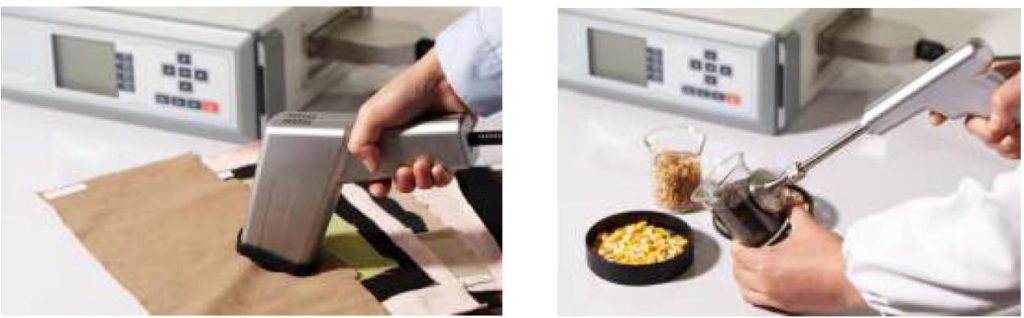
The advent of small portable NIR spectrometers has enabled food testing on the spot, from retail to farms. They provide instant feedback on quality parameters, without the requirement to transport samples to the laboratory. The portable systems for NIR are especially useful for perishable food items fresh produce, perishable foods, and monitoring of quality on the field which can improve the efficiency of supply chains and cutting down on consumption.
- Standardization and Calibration Transfer
The next steps will be focused on establishing a standard for NIR instruments and calibration protocols across various instruments and places. The improved transfer of calibration techniques will enable models created using an instrument be used consistently on other instruments, which will facilitate consistency across worldwide food manufacturing as well as testing network.
- Multi-modal and Hybrid Technologies
NIR spectroscopy is being increasingly used in conjunction with other analytical techniques like mid-infrared spectroscopy, Raman spectroscopy, or hyperspectral imaging. These methods can offer greater insight into food quality, which includes minor and major components, internal flaws and characteristics on the surface.
- Real-time In-line Monitoring and Automation
A future for NIR spectroscopy will see greater integration into production lines, which will allow completely automated, real-time quality control. When combined with process control and robotic technology, NIR quick analyzer can help improve efficiency in production, cut the amount of waste and ensure the same quality of products without any manual intervention.
- Enhanced Detection Capabilities
The ongoing research is aimed at improving the ability of NIR spectroscopy for the detection of minor contaminants, constituents or trace adulterants. By increasing the limits of detection and signal resolution, NIR technology will become more reliable in the field of tests of authenticity and food safety.
Summary
NIR spectroscopy works by analyzing how near-infrared light interacts with food at the molecular level, providing rapid insights into its composition and quality. Because of its non-destructive nature, minimal preparation and ability to deliver multi-parameter results in real time, NIR spectroscopy has become the foundation of modern food quality testing. As chemometric modeling and portable devices advance, NIR spectroscopy will become more and more critical in ensuring safe, consistent and high-quality food products.
Related Products Recommendation
Get Quote Here!
Latest Posts


What Next?
For more information, or to arrange an equipment demonstration, please visit our dedicated Product Homepage or contact one of our Product Managers.


