

Laboratory High Pressure Homogenizer

Laboratory High Pressure Homogenizer
The laboratory high pressure homogenizer is an advanced piece of equipment designed to improve the uniformity and stability of various emulsions, suspensions, and cell disruptions. It operates by applying high pressure to materials, forcing them through a narrow gap, breaking down particles to a fine size, enhancing product consistency and quality. Ideal for industries such as pharmaceuticals, biotechnology, food, and cosmetics, this homogenizer ensures efficient processing and reliable performance for various applications that require precise and high-quality results.
Features of Lab High Pressure Homogenizer
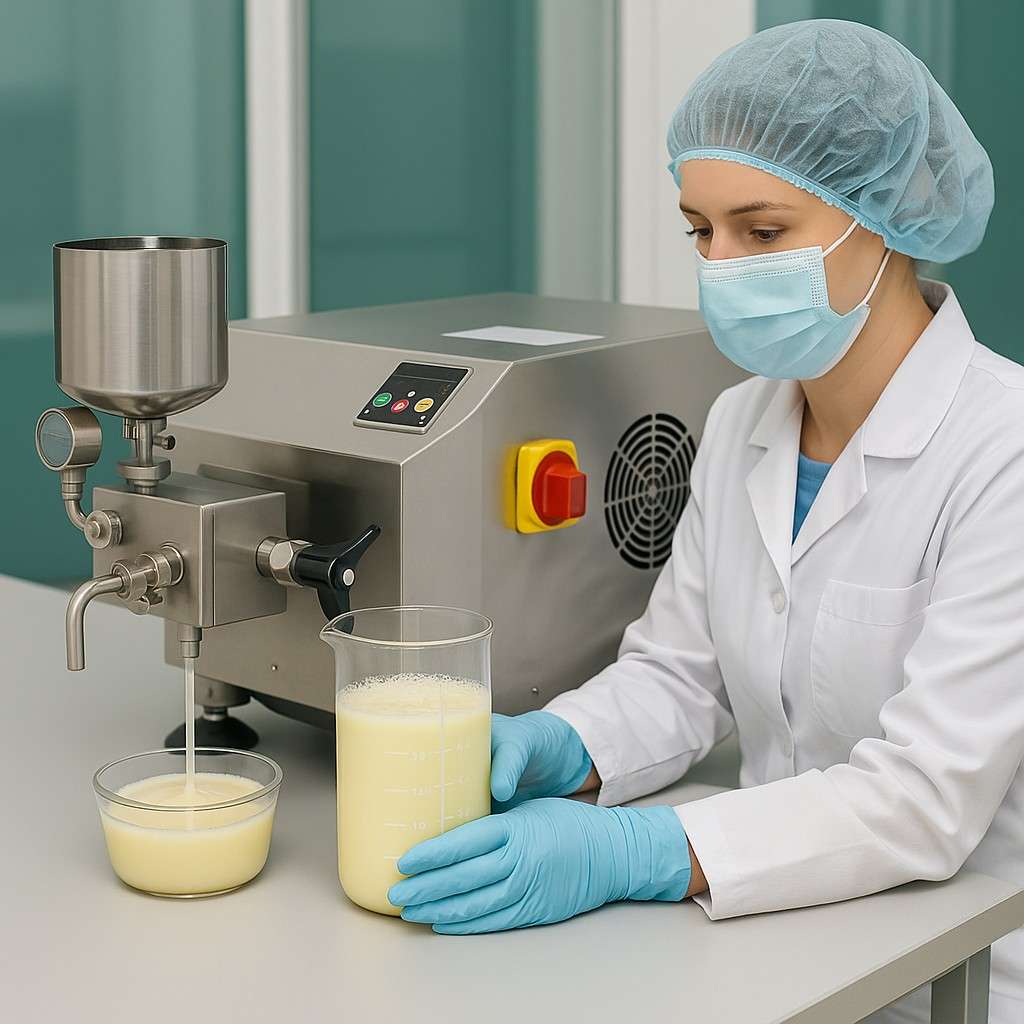
- Ultra-high operating pressure. Suitable for a wide range of applications, from common emulsions to complex nanomaterials, liposomes, and other materials.
- Material-contacting components are made of 316L stainless steel, which meets food and drug standards.
- Intelligent control system. Smart touch screen with integrated PLC enables parameter presetting, real-time monitoring, and data logging.
- Comprehensive temperature control. Integrated cooling system and temperature sensor.
- Comprehensive safety features include a pressure relief valve, overload protection, leakage protection, and door-opening shutdown interlocks.
- Modular, quick-disassembly design. Easy to clean and replace.
Specifications of Lab High Pressure Homogenizer
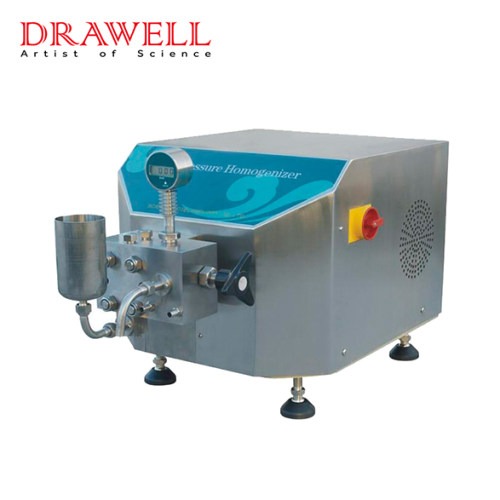
High Pressure Homogenizer DW-150
• Max processing capacity: 6-12L/h
• Motor power: 1.5KW class 8

DW-150A Medium-sized High Pressure Homogenizer
• Maximum flow: 12-25 liters/hour
• Motor power: 3.0KW class 8

Drawell-D207A Ultra High Pressure Homogenizer
• Min working pressure: 1800bar/180Mpa/26100psi
• Maxi sample throughput:15L/H
• Min sample throughput: 15ml
• Max product viscosity: 2000cP
3 Types of Laboratory Homogenizers
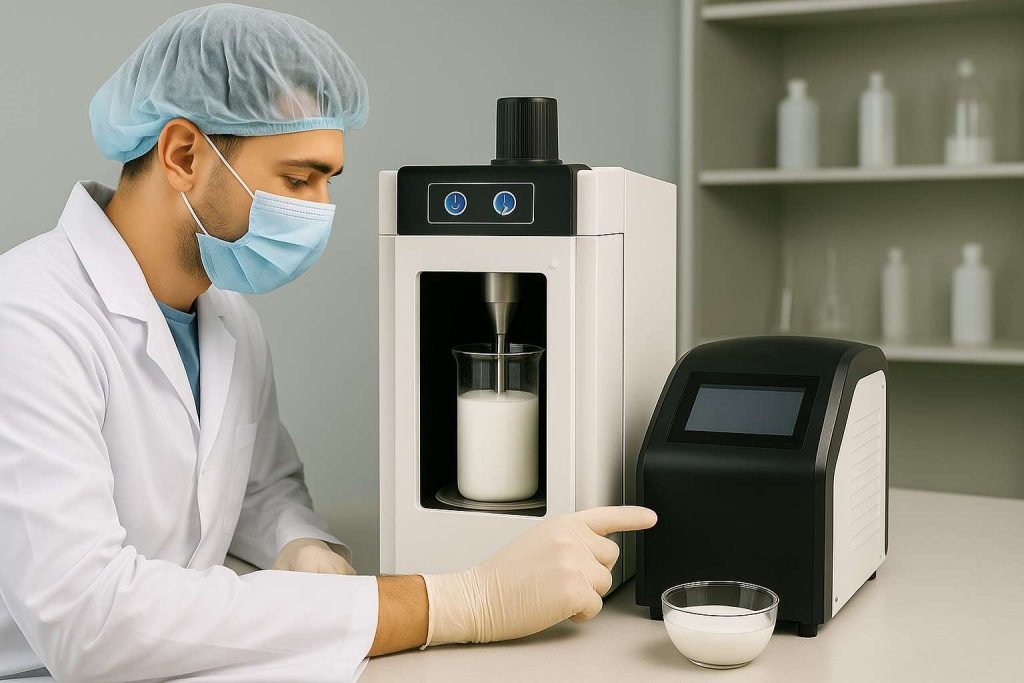
Drawell Ultrasonic Cell Shredder is a multi-functional and multi-purpose instrument that uses the cavitation effect of ultrasonic waves to process experimental samples. It is suitable for samples with a volume of 0.5-600ml. It has the advantages of continuously adjustable ultrasonic time and power. It can break various animal and plant tissues, cells, and bacteria. It can also be used for emulsification, separation, dispersion, extraction, and acceleration of chemical reactions, etc.
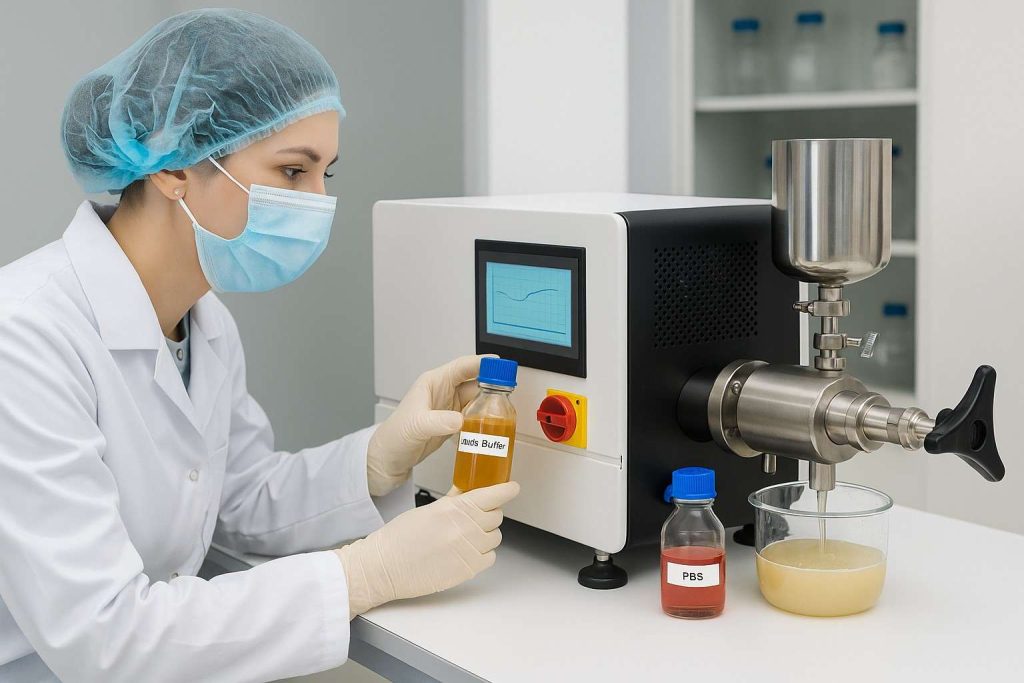
The ultra-high pressure cell crusher is a fast, convenient, and pollution-free cell crushing experimental instrument. Different pressures can be selected for different experiments during the operation. The maximum pressure is up to 256MPa (37120PSi), which can meet the requirements of various types of cell crushing. The nano-homogenization/dispersion requirements of the sample can also achieve effective temperature control, so as to effectively obtain the required substances in the cells.
3. Sterile Slap Homogenizer (Lab blenders stomacher)
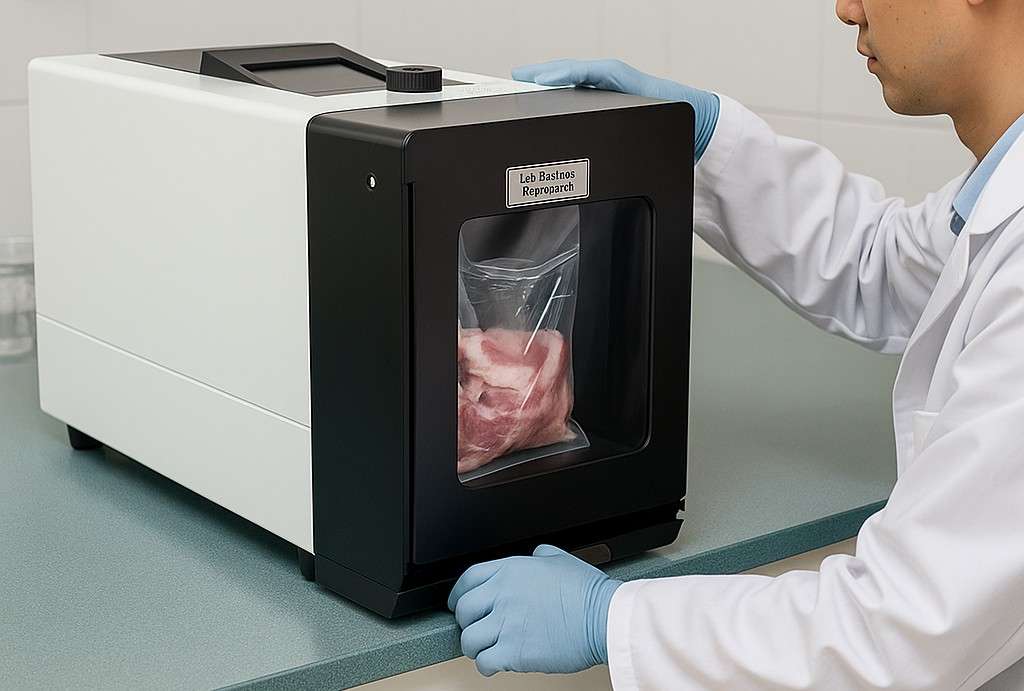
Lab blenders stomacher sterile homogenizer, also known as slap homogenizer, can make the process of extracting bacteria from solid samples very simple, just add the sample and diluent to the sterile sample bag (maximum The sample can be processed up to 400ml), and then put the sample bag into the flapping homogenizer to complete the sample processing.
How to Choose the Right Laboratory High Pressure Homogenizer?
If you’re still unsure how to choose the right high pressure homogenizer for your application, please contact us and our experts will provide recommendations.
Applications of Laboratory High Pressure Homogenizer

The high-pressure homogenizer is a device for homogenizing, thinning, and high-pressure conveying of liquid materials. The equipment is widely used in production, scientific research, and technological development in the fields of food, dairy, beverage, pharmacy, fine chemicals, and biotechnology.
- Preparation of fat particles, microemulsions, liposomes, suspensions, and microcapsules in the pharmaceutical industry;
- Cell disruption of bioengineering products, extraction, and homogenization of intracellular and extracellular materials;
- Homogenization and emulsification of food and beverage industry products to improve product stability;
- Homogeneous dispersion of products in cosmetics, fine chemicals, and other industries;
- Production and preparation of conductive paste and resistance paste.
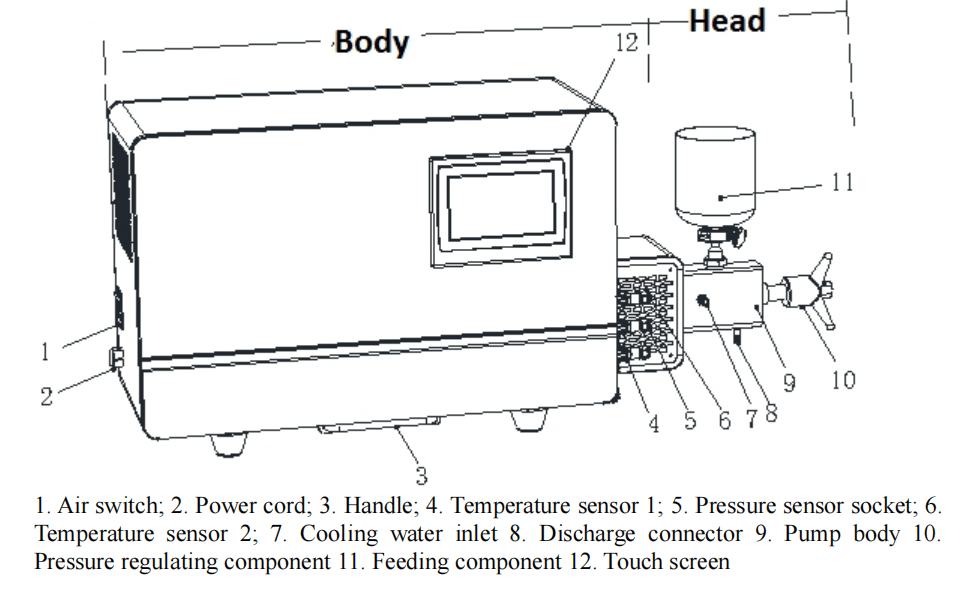
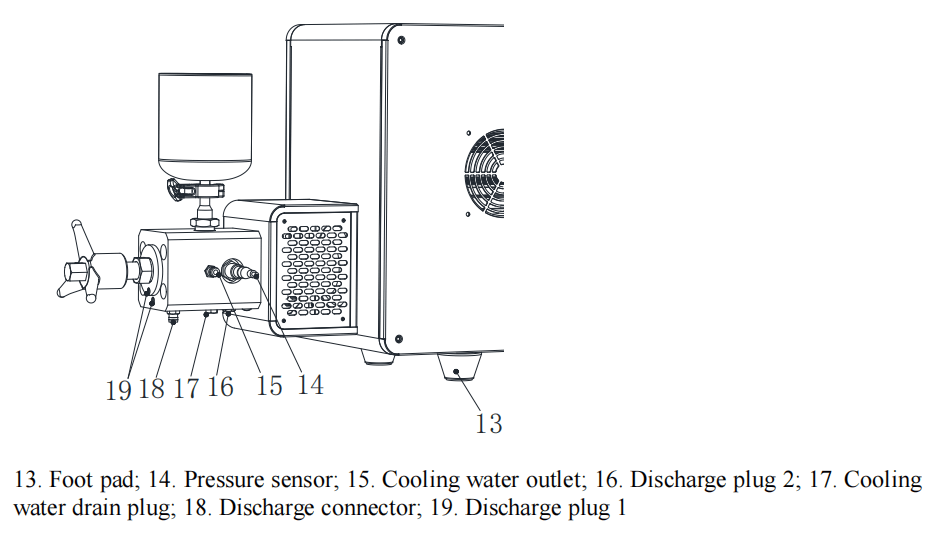
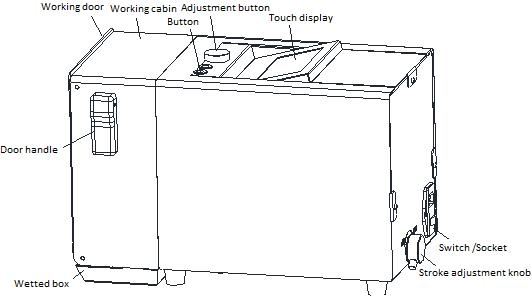
Structure Appearance and Main Components
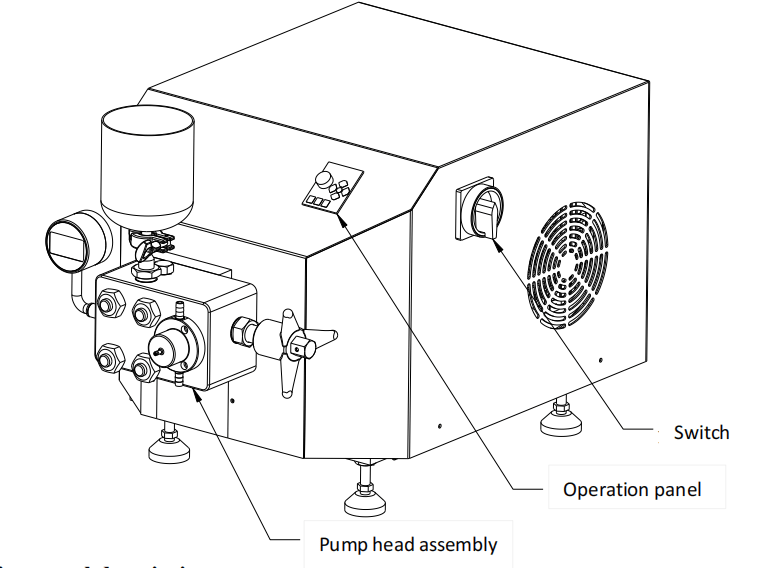
1. High Pressure Homogenizer DW-150&150A
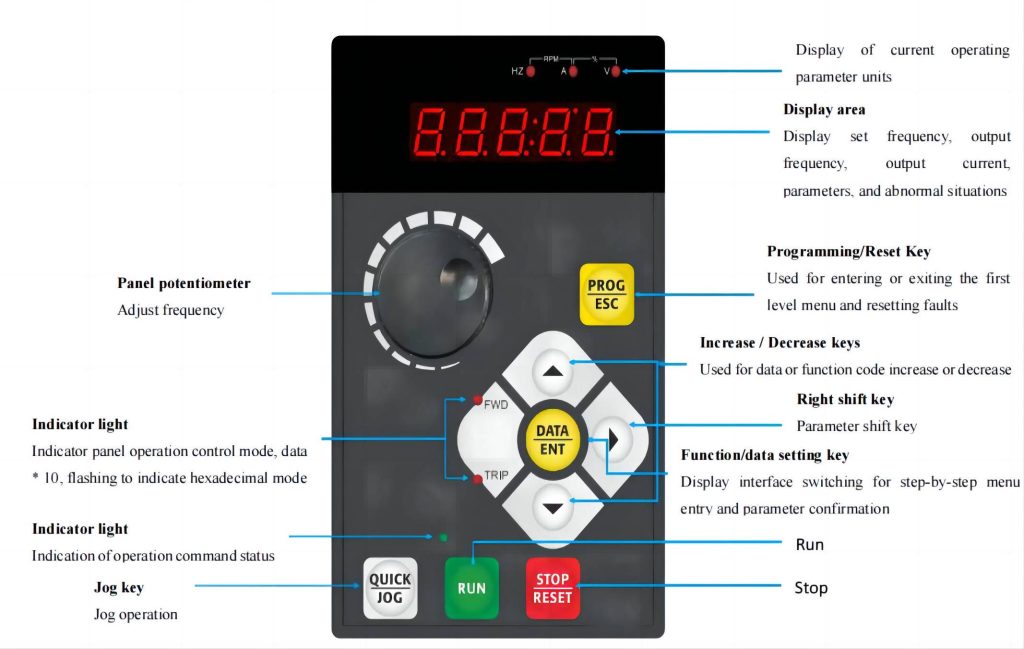
2. High Pressure Homogenizer Drawell-D207A
3. Lab Blenders Stomacher DW-04 & DW-09 & DW-11
Common Faults and Solutions of Laboratory High Pressure Homogenizer
| Problems | Problem reason | Solutions |
| The motor is running, but there is no material flowing out of the discharge port. | Pump head inlet blockedPlunger break or looseMaterial does not fully enter the pump body | Open the feed valve to remove the blockageReturn to factory maintenanceSee normal operation step C |
| No homogenization pressureUnstable pressure | Feed valve seat wearDamaged or unconnected pressure sensorHomogeneous valve gasket is damagedOne-way seat wear | Check and replace the inlet valve seatCheck or replace the pressure sensorReplace this partReplacement check valve |
| Pressure can’t be adjusted | Homogenizing valve is worn and damaged | Replace the homogenizing valve (or use another side) |
| Reduced flow or no discharge after pressurization | Feed valve seat wearHomogeneous valve gasket is damagedOne-way seat wear | Check and replace the inlet valve seatCheck or replace the pressure sensorReplace this partReplacement check valve… |
| Material leaks from the threads of the handwheel and body | Sealing ring wear on the ram shaftHandwheel spins out too much | Screw the handwheel clockwiseCheck and replace the seal |
| Material leaks from under the flange of the pump head | Plunger seal wear | Replace the plunger seal |
Why Choose US?
- Rich categories.
- The products are market-oriented and exported to many countries in the world.
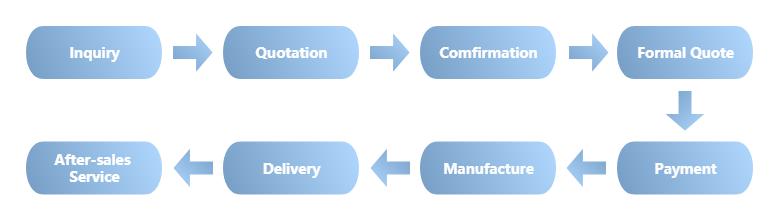
- Perfect sales system, efficient and fast after-sales service.
- On-time delivery rate reaches 100%.
- High-cost performance.