


The selection process for laboratory glassware washers stands as an essential choice which determines cleaning efficiency, experimental accuracy and compliance with applicable regulations. Laboratories must evaluate their specific operational needs before selecting from the available models of lab glassware washers, each designed for specific applications, capacities and cleaning requirements.
Understanding the Functions of Laboratory Glassware Washers
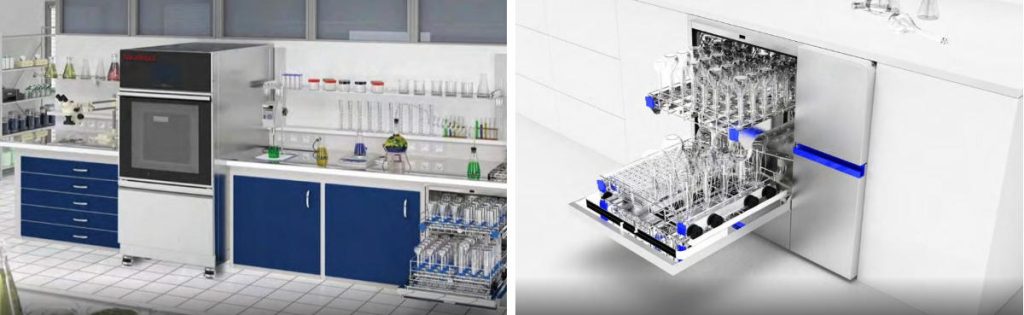
Laboratory glassware washers function as dedicated equipment which utilizes standardized washing processes to sanitize laboratory equipment that includes beakers, flasks, test tubes, pipettes and bottles. These systems achieve cleaning results which remain constant through all operations because they use exact methods to control their cleaning activities through temperature and water pressure and detergent concentration and cycle length. Research laboratories and pharmaceutical production facilities and clinical settings and industrial quality control areas which require high standards of cleanliness make use of these products.

Different Types of Laboratory Glassware Washers
| Type of Lab Glassware Washer | Key Features | Advantages | Limitations | Typical Applications |
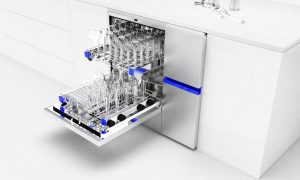
| Undercounter Washers | Compact design, fits under benches, programmable cycles | Space-saving, easy installation, cost-effective | Limited capacity, not suitable for heavy workloads | Small labs, clinics, academic laboratories |
| Freestanding (Floor-Standing) Washers | Large capacity, multiple racks, high-temperature cleaning | High throughput, versatile, robust performance | Requires more space, higher initial cost | Pharmaceutical, chemical, industrial labs |
| Rack-Based Modular Washers | Interchangeable racks and inserts, customizable setup | Flexible, adaptable to various glassware types | May require additional accessories, setup complexity | Multi-purpose labs with diverse glassware |
| Tunnel (Conveyor) Washers | Continuous conveyor system, multi-stage cleaning | Very high throughput, automation, minimal manual handling | Expensive, large footprint, complex maintenance | Large-scale production, industrial facilities |
| Ultrasonic Washers | Uses high-frequency sound waves (cavitation cleaning) | Excellent for delicate and complex shapes, deep cleaning | Limited capacity, often used as supplementary cleaning | Precision labs, analytical and research applications |
| Bottle Washers | High-pressure internal jet cleaning, specialized for containers | Effective for bottles and large vessels, thorough internal cleaning | Limited versatility for other glassware | Microbiology, pharmaceutical labs |
| Washer-Disinfectors | Combines washing with thermal disinfection | Ensures hygiene, meets strict regulatory standards | Higher energy consumption, higher cost | Clinical, biomedical, pharmaceutical labs |
| Custom/Specialized Washers | Tailored design, automation integration, specific configurations | Meets unique requirements, highly efficient for specialized tasks | Expensive, longer lead time | Advanced research, specialized industrial processes |
Key Factors to Consider for Choosing the Most Suitable Glassware Washer
1. Understanding Your Laboratory Requirements
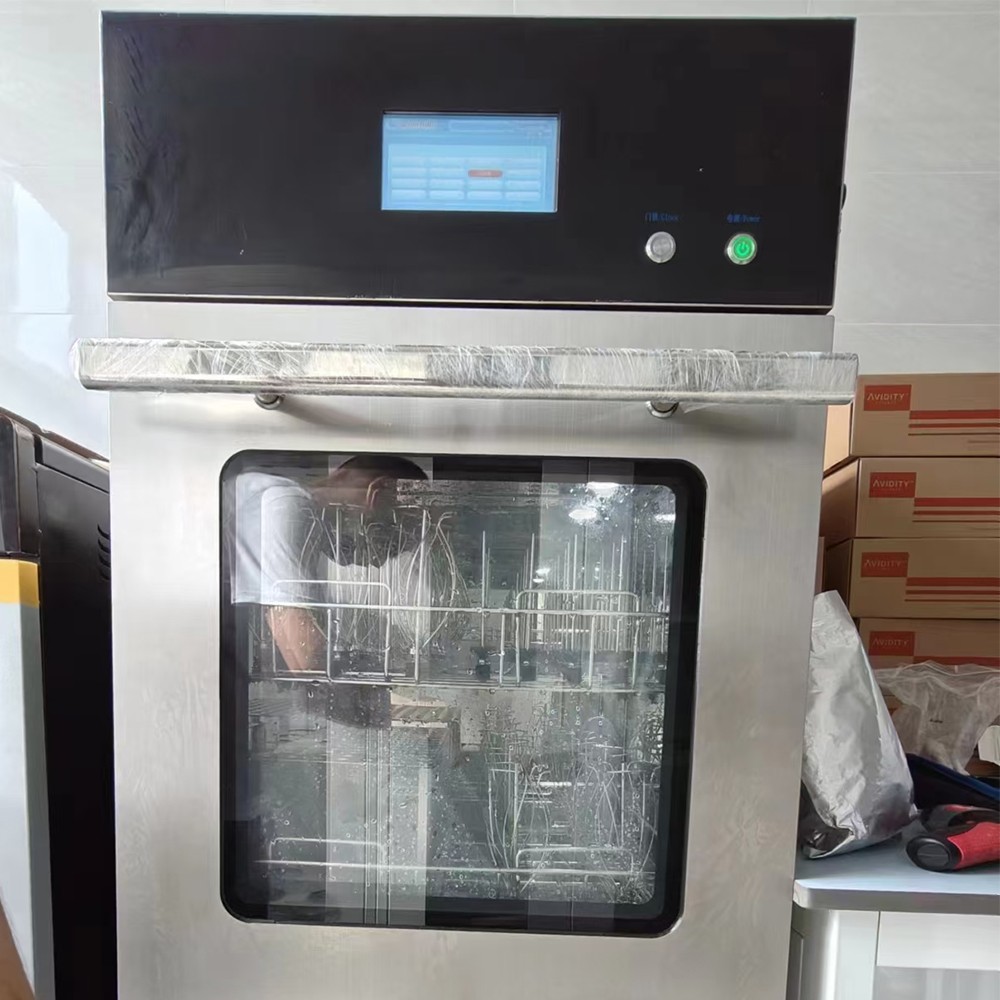
The first step of buying an automatic laboratory ware washer is properly understanding the requirements of your laboratory. Different types of laboratories have different cleaning issues, e.g. academic, pharmaceutical, environmental, or industrial laboratories.
Some of these laboratories have glassware requirements such as beakers, flasks, pipettes, or large-bottle-sized glassware. Laboratories with delicate or complex glassware require specialized washer systems, while highly automated environments benefit from processing capacity. This assessment permits matching up the washer with day-to-day use based on capacity and application setup.
2. Evaluating Capacity and Throughput
Closely watch upon volume; it is paramount in several busy laboratories. Smaller laboratories with less to wash will probably be able to avail of an undercounter washer, while bigger laboratories might consider stand-alone or pass-through models.
It is imperative for cleaning throughput to match laboratory operating tempo. A washer that cannot keep up with demand may create bottlenecks, whereas an oversized system may lead to unnecessary energy and water consumption. Building the right balance helps with efficiency and cost-effectiveness.
3. Assessing Cleaning Performance and Technology
Cleaning effectiveness of a glassware washer can be influenced by the cleaning mechanisms or technologies employed. Modern systems usually have programmable wash cycles, adjustability of temperatures, and high-pressure spray systems to tackle persistent residues. Complex contaminants prevailing in some laboratories call for advanced possibilities like those represented by ‘multi-step washing,’ either with ultrapure water rinse or integrated drying systems, while in some cases ultrasonic cleaning could play a major role, ensuring that there will be no absolutely invisible microscopic particles left.
4. Compatibility with Glassware Types
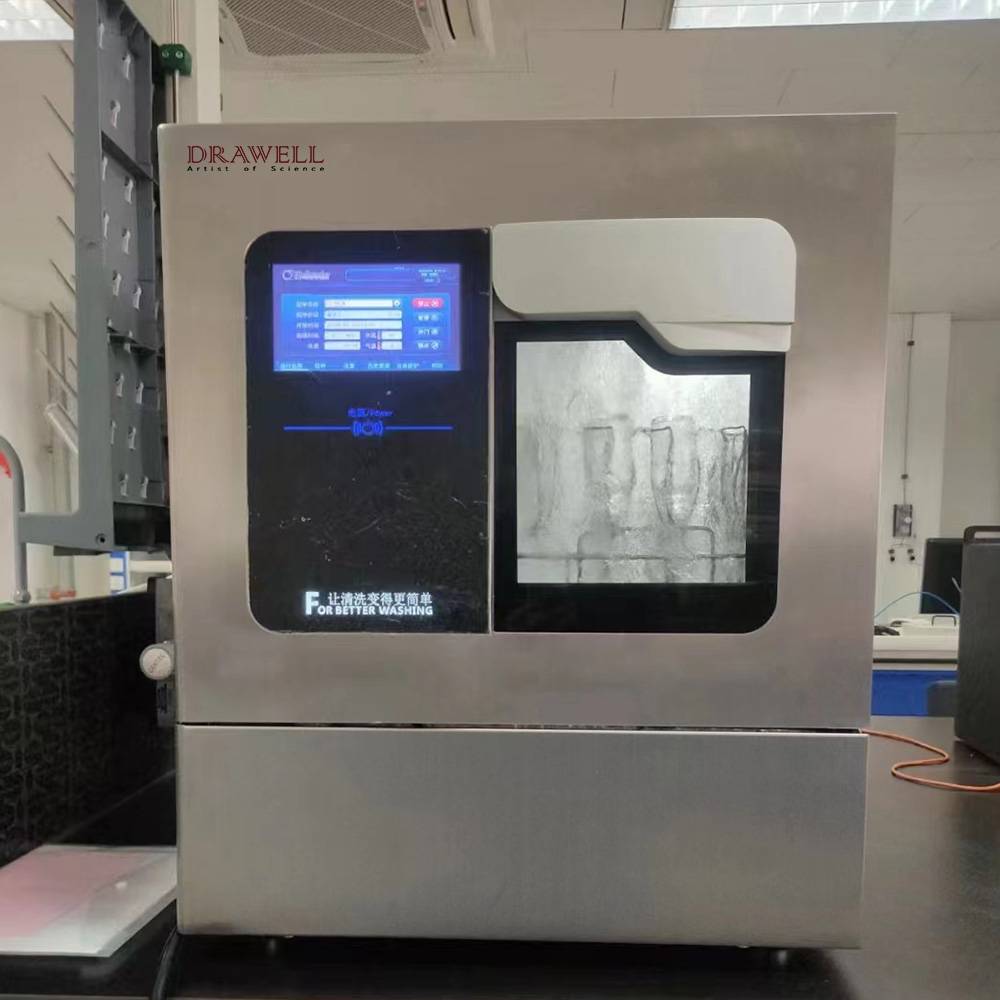
Every washer cannot wash all kinds of glassware. The racks, nozzles, and inserts design affects the proper cleaning. The laboratories which work with a diversified range of glassware, should opt for the modular systems acquiring with the interchangeable racks. These will permit you to customize the machine according to the shapes and sizes in consideration and get cleaned without harm to the equipment. For the aforementioned reasons, there will be a lower chance of damage and an elongated continuation of laboratory equipment.
5. Water and Energy Efficiency
It is estimated that sustainability and operational costs could be substantial in the length of time. Efficient glassware washers were meant to minimize water and energy consumption without effect on cleaning performance.
Water recycling, optimized spraying units, and dry cycle energy savings are significant features of efficient models that would eventually lessen utility costs. In the long run, a wise investment in an energy-efficient glassware washer can repay real dividends in cost savings toward environmental responsibility.
6. Compliance with Standards and Regulations
Thus, in regulated regimes, laboratories have to ensure that their equipment conforms to the various standards with predecessor. Glassware washers must conform to standard on hygiene, safety, and validation.
For instance, washer-disinfectors used in the pharmaceutical and clinical laboratories require adherence to stringent disinfection standards-the apparatus must have documentation with traceability and validation abilities. In the process, quality reviews and audits also gain in significance.
7. Ease of Use and Automation
Very well established has been the response that user-friendliness guarantees productivity. This is best achieved with modern lab glassware washers where user-friendly controls, automated cycles, as well as processes that virtually eliminate manual intervention are de rigueur.
Automation solutions, characterized by high reproducibility, lessen the possibility of human error. Advanced solutions will also be capable of interfacing with laboratory information management systems (LIMS), thus facilitating a more substantial documentation of the washer’s performance.
8. Service Support
Additionally, systems with self-diagnosis systems allow the user to ascertain the performance of its essential components without the need for complicated tools. This is furthermore proved by the evaluation method given, keeping in mind the inter-relationship between the latest technologies and the growth of real-time demand of the client technically. A need for post-sales follow-up is very crucial for laboratories in a continuous and high-uptime task endeavor.
9. Budget and Total Cost of Ownership
Being very important in cost evaluations, the initial cost is only a small part of other variables related to cost considerations. The total cost of ownership looks closely at the initial or brand-new system cost, database retrieval and software update and installation cost, and setting up how utilities will apply to the machine, how once it’s in operation I will manage and carry on maintenance, and importantly the costs of consumables from day to day and periodic account fees that include detergents.
10. Future Scalability and Flexibility
In the laboratory, requirements generally undergo modifications in the long term. Selecting a lab washer-glassware that, in fact, can accommodate change for the future is a quality advantage. Modular designs, upgrade options, and flexible configurations allow laboratories to expand capacity or accommodate new types of glassware. This scalability ensures that the system remains relevant as workloads and technologies change.

Maintenance for Different Types of Laboratory Glassware Washers
This chart offers maintenance practices for various types of lab glassware washers to help you choose the suitable type.
| Type of Lab Glassware Washer | Key Maintenance Tasks | Frequency | Common Issues | Maintenance Tips |
| Undercounter Washers | Clean filters, inspect spray arms, check detergent dosing system | Weekly to monthly | Clogging, reduced spray efficiency | Avoid overloading, use proper detergents |
| Freestanding Washers | Inspect pumps, clean chamber, check heating elements and seals | Weekly inspection, quarterly servicing | Scale buildup, pump wear, temperature inconsistency | Use descaling agents regularly, monitor performance logs |
| Rack-Based Modular Washers | Clean and inspect racks/inserts, ensure proper alignment of nozzles | Weekly | Misalignment, incomplete cleaning | Verify correct rack configuration before each cycle |
| Tunnel (Conveyor) Washers | Maintain conveyor system, inspect multiple wash zones, clean nozzles | Daily checks, scheduled servicing | Conveyor jams, uneven cleaning, nozzle blockage | Implement preventive maintenance schedule, monitor throughput |
| Ultrasonic Washers | Replace cleaning solution, clean tank, check ultrasonic transducers | Daily to weekly | Reduced cavitation efficiency, residue buildup | Use appropriate cleaning fluids, avoid overuse of solution |
| Bottle Washers | Inspect internal jets, clean nozzles, check pressure system | Weekly | Blocked jets, inconsistent pressure | Ensure proper bottle placement, monitor jet performance |
| Washer-Disinfectors | Validate disinfection cycles, inspect temperature sensors, clean chamber | Routine validation, monthly servicing | Incomplete disinfection, sensor drift | Perform regular calibration and validation tests |
| Custom Washers | Follow manufacturer-specific maintenance protocols, inspect automation systems | As recommended | System-specific faults, integration issues | Maintain detailed service records, ensure trained personnel handle maintenance |

Summary
Choosing the right laboratory glassware washer requires a comprehensive evaluation of mutual consensus of working needs, performance criteria, and value-based spanning the long term. The laboratory should acknowledge and critically evaluate the factors, including capacity, cleaning technologies, working efficiency, and compliance, etc, recommend a lab glassware washer that supports the staff in being more productive and, to keep matters brief, ensures reliable cleanliness.

What Next?
For more information, or to arrange an equipment demonstration, please visit our dedicated Product Homepage or contact one of our Product Managers.


