


Inordained laboratories, shaking incubators are versatile tools which integrate temperature control, agitation and incubation provide the conditions for optimum growth of microorganisms, and host cell cultures, and for the performance of some chemical reactions. Of the many types, orbital and reciprocating shaking incubators are the most predominant types. Each of the shaking incubator is developed to meet specific experimental goals. To make the right choice for your laboratory workflow, it is important to know the differences, advantages, disadvantages and intended goals of orbital and reciprocating shaking incubators.
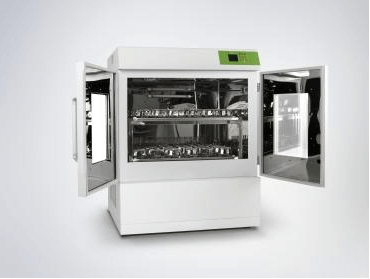
What are Orbital Shaking Incubators?
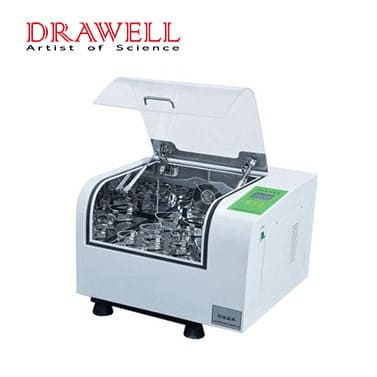
Orbital shaking incubators are capable of providing inline, equal and unrestricted travel of all the segments of the stirring apparatus in a circular and orbital. The apparatus to be used in the cell and microbial or texture composition of the cell in a culture is used to render liberating sheets of cells, circular apparatus or to yield, blend, and forge sheets or textures in a segmented form, cover or lid. The sheet is to be positioned in an open container, and are to be concealed in a cloth or limb, is to be assigned, and of square design.
Advantages
- Gentle Mixing: The circular orbital motion minimizes shear stress, making it suitable for delicate cell cultures, microbial growth, and protein expression studies.
- Uniform Aeration and Mixing: Ensures consistent oxygen and nutrient distribution across all samples, improving reproducibility.
- Versatility: Can accommodate various vessel types, including flasks, tubes, and multiwell plates. Some models feature modular platforms to increase flexibility.
- Low Vibration and Noise: Designed to minimize mechanical stress, protecting sensitive samples while maintaining a quiet lab environment.
- Integrated Environmental Control: Contemporary models frequently include precise temperature and humidity control and CO2 and O2 adaptive environmental shifting, which creates conditions that support and optimize plant growth.
Limitations
- Limited Agitation for Viscous Samples: High viscosity liquids and suspensions may prove difficult with the gentle, slow, and orbital agitation.
- Moderate Load Capacity: In comparison to reciprocating shakers, the orbital incubators are designed for use with smaller and lighter vessels.
- Slower Mixing for Certain Reactions: In cases where rapid agitation and quick dissolved solute are required, orbital motion agitation will not suffice.
- Cost: Compared with basic shaking incubators, advanced models will always be more costly due to added integrated sensors and environmental control.
Applications
- Microbial Culture Growth: Great for the growth of bacteria, yeast, and other microorganisms that need gentle aeration and mixing.
- Cell Culture Studies: Minimally sheared mammalian, insect, and plant cell cultures are also supported.
- Protein Expression and Fermentation: In recombinant protein production and enzymatic assays, orbital shakers are used to mix and supply oxygen in the fermentation process.
- Chemical and Biochemical Assays: Solubility and enzymatic assays are example experiments that need temperature regulation and controlled agitation.
- Pharmaceutical and Biotech Research: Controlled environmental conditions are used in labs for drug development, vaccine production, and testing to meet biosafety standards.
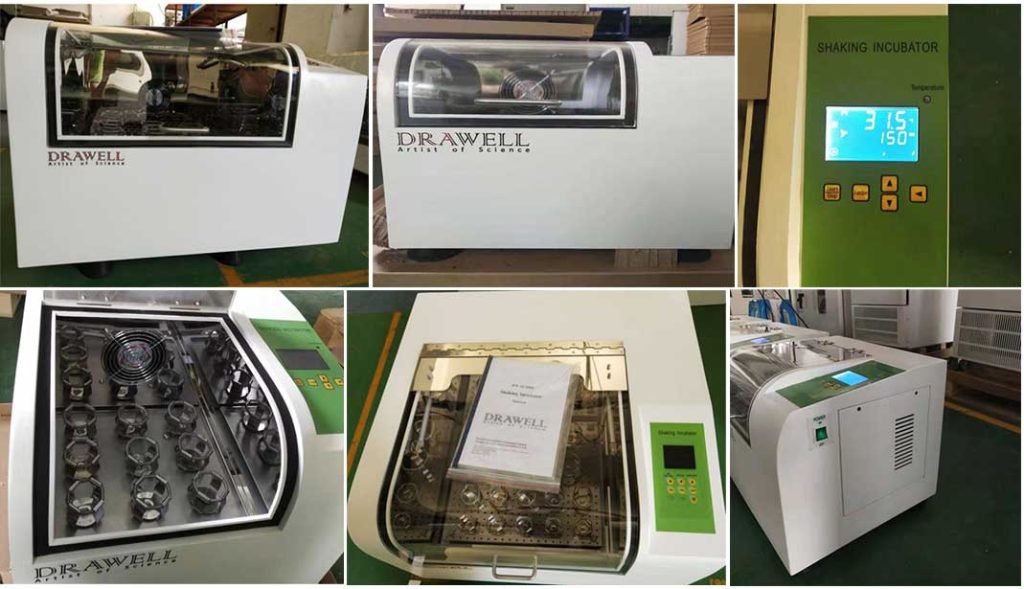
What are Orbital Shaking Incubators?
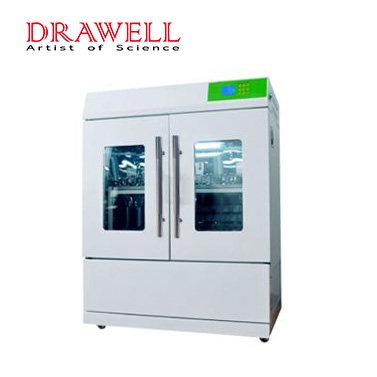
Reciprocating shaking incubators are devices where samples are incubated with shaking in a controlled environment of temperature and humidity and are subjected to linear back and forth movement in a straight line. Due to the sequential linear movement of the samples, the stirring agitation produced is of greater intensity and more suitable for high-density cultures and viscous wherein more vigorous stirring is required, for example, in concentric dissolving processes and processes with high mixing requirements.
Advantages
- Effective Agitation: The linear back and forth motion in a reciprocating incubator will accelerate your mixing, and lead to better dissolution of the solute and mass transfer.
- Increased Load: A reciprocating incubator is able to accommodate larger and heavier flasks, tubes and vials while still maintaining a consistent shake.
- Increased Customization: The variable stroke lengths and speeds in other models allow for motion customization to better suite a sample or sample viscosity.
- Greater Sample Durability: Viscous sample for mixing will not pose a problem.
- Visceral Sample Mixing: A reciprocating incubator will accommodate more viscous media and dense suspensions where an gentle orbital motion would not pose the desired results.
Limitations
- Higher Shear Stress: A sample that is delicate and sentive will likely be damaged under the vigorous conditions of there linear motion.
- Noise and Vibration: Reciprocating incubators can be noisier and produce more vibration, requiring careful placement in the laboratory.
- Less Suitable for Sensitive Cultures: Mammalian or insect cells may not tolerate the vigorous shaking.
- Complex Maintenance: In comparison to orbital incubators, the heavier-duty linear drive mechanisms may need frequent maintenance.
Applications
- High-Density Microbial Cultures: Promotes growth and aeration in dense suspensions of bacteria and yeast.
- Chemical Reactions and Solubility Studies: In viscous solutions, promotes rapid mixing and uniformity of reaction.
- Industrial and Large Scale Lab Processes: Appropriate for fermentation, bioprocessing, and other high-volume experiments in lab.
- Viscous Media Processing: Suitable for gelatinous solutions, protein-rich media, and thick chemical formulations.
- Accelerated Assays: Under precise temperature control, the rate of solute dissolution, homogenization, or enzyme reaction is significantly elevated.
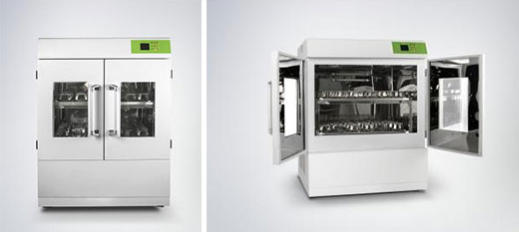
Key Differences Between Orbital and Reciprocating Shaking Incubators
| Feature | Orbital Shaking Incubators | Reciprocating Shaking Incubators |
| Motion Type | Circular orbital motion | Linear back-and-forth (reciprocating) motion |
| Mixing Intensity | Gentle, low shear stress | Strong, higher shear stress |
| Sample Sensitivity | Ideal for delicate cell cultures and sensitive samples | Less suitable for delicate samples, better for robust cultures or viscous media |
| Load Capacity | Moderate, limited by platform size | High, can handle heavier flasks and larger volumes |
| Viscosity Handling | Best for low-to-moderate viscosity liquids | Suitable for high-viscosity or dense suspensions |
| Aeration and Uniformity | Ensures uniform aeration and gentle mixing | Provides rapid mixing, less uniform for sensitive cells |
| Noise and Vibration | Low noise and vibration | Higher noise and vibration |
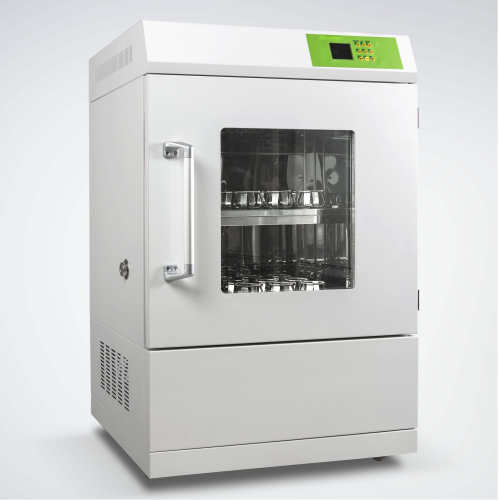
Factors to Consider for Choosing the Right Type Between Orbital and Reciprocating Shaking Incubators
Understanding the key factors that influence the choice between orbital and reciprocating shaking incubators is essential for optimizing experimental outcomes.
- Sample Sensitivity and Culture Type
The degree of sensitivity that different samples can exhibit must be taken into consideration. Orbital shaking incubators rotate in a gentle, circular motion with minimal shear stress, making them well suited for delicate cell cultures, mammalian cells, and sensitive microorganisms. Conversely, reciprocating incubators perform a more vigorous back and forth motion, producing potentially damaging shear forces for attenuate samples. For this reason, laboratories which deal predominantly with sensitive biological tissue concentrate on orbital incubators, if only for the security of the samples and for reliable and uniform growth conditions.
- Viscosity and Media Characteristics
The other determining factor will always be the medium’s physical properties. Orbital incubators perform to the best of their ability with low to medium viscosity liquids, achieving consistent mixing and aeration without over agitation and damaging the sample. For the reciprocating incubators, linear motion is more appropriate for viscous and dense media, where more vigorous agitation is needed for thorough mixing and solute dissolution. Identifying sample medium viscosity and density will help to decide which motion type will best preserve desired experimental conditions.
- Load Capacity and Vessel Size
When deciding on the type of shaking incubator to procure, the estimated volume and number of samples to be incubated, especially on the volume and number of samples to be incubated is important to take into consideration. Orbital incubators is often referred to as “light-duty” because it is used for “light-load” applications, and is ideal for small to medium scale incubations using standard size flasks, tubes, or multiwell plates. In contrast to the orbital incubators, the reciprocating incubators are designed for heavy, and large volume incubations. This makes them ideal for industrial scale processes, high density cultures, and scenarios when a number of large vessels are used for experiments in parallel. The expected load is critical to the performance and the longevity of the incubators.
- Agitation Requirements and Experimental Goals
The required agitation for a designed experiment is also a determining condition, and the type of required stirring and agitation can be critical. With orbital incubators, light and gentle stirring is provided, and is ideal for situations of constant, harmonized aeration and uniform sample dispersion in applications of cell culture, protein expression, or enzymatic assays. On the other hand, reciprocating incubators prefer to have high energy and vigorous agitation which exceeds the expected outcome in the mixing of an inter medium, of a high density culture or viscous liquid, and where there is an acceleration of the reaction. It is important to align the expected and required agitation in the designed experiment in order to gain the highest level of the expected outcome, while maintaining the sample integrity.
- Environmental Control and Monitoring
In contemporary shaking incubators, self-contained systems with environmental control, including temperature, humidity, and optional CO₂ and O₂, are built in. For experiments needing stable environmental control, orbital incubators are preferred. Nevertheless, simpler control systems in reciprocating incubators, which are built for strength and endurance, may meet the needs of industrial applications. Evaluating the required control and monitoring levels of the intended application provides guidance on incubator selection that fulfills the intended research goals.
- Workflow and Laboratory Efficiency
The type of incubator in use has a sequential influence on the workflow of the entire laboratory system. Orbital incubators, which perform work with minimal sample disruption, deliver the precise and reproducible results needed for research laboratories focused on quality and sensitivity. In contrast, reciprocating incubators improve spindle speed and handle greater volumes to heighten throughput and lessen processing time, which is critical in industrial settings, especially those oriented to high-throughput and production. Consideration of the role of the incubator in the overall system design of the laboratory is crucial in achieving intended laboratory goals.
To conclude:
- Orbital shaking incubators are ideal for applications with gentle and uniform agitation, including microbial growth and sensitive cell cultures.
- Reciprocating shaking incubators are designed for industrial applications involving vigorous mixing and high-viscosity liquids.
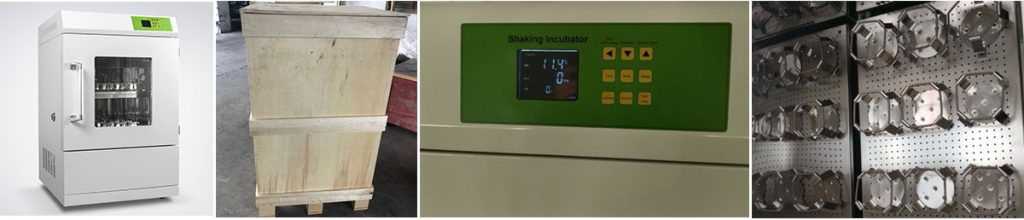
Final Thoughts
Each type of shaking incubator, whether orbital or reciprocating, has unique benefits designed for particular uses in the lab. Orbital shakers are ideal for gentle, uniform mixing of sensitive cultures, and reciprocating shakers are suited for vigorous shaking of high-density or viscous samples. Choosing the right type of shaking incubator improves reproducibility, efficiency, and overall success of your experiments.
Related Products Recommendation
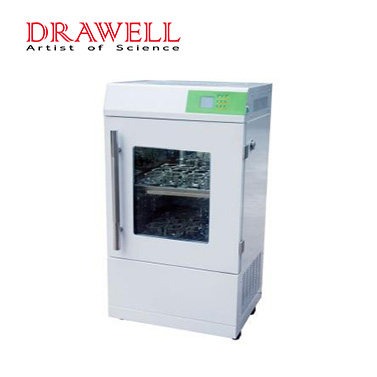
Get Quote Here!
Latest Posts
No posts
What Next?
For more information, or to arrange an equipment demonstration, please visit our dedicated Product Homepage or contact one of our Product Managers.


