


A water bath is a staple piece of equipment in many laboratories, used across various disciplines for its ability to maintain a consistent and controlled temperature. Whether you’re working in chemistry, biology, or pharmaceuticals, water baths provide an efficient and reliable means of incubating samples, dissolving substances, or conducting temperature-sensitive experiments. In this article, we will explore the uses of water baths in different types of laboratories, share some real‑world tips from the bench, and help you figure out which type might suit your work best. Let’s get started.
How Water Baths Work
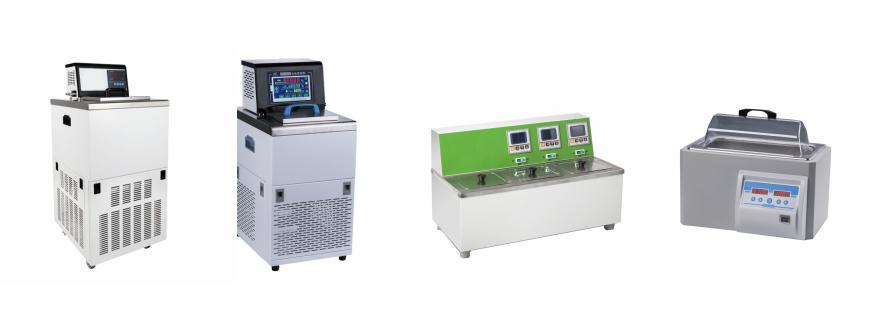
Water baths operate by heating water to a desired temperature and maintaining that temperature for an extended period. They are designed to provide gentle, uniform heating, which is essential for experiments that require precise temperature control without the risk of overheating or direct contact with a heat source.
A typical water bath consists of a container filled with water, a heating element, and a thermostat or temperature control mechanism. The sample to be heated is placed in a vessel, often in a test tube or flask, and immersed in the water bath. The water acts as a heat transfer medium, ensuring that the temperature around the sample remains consistent. The thermostat allows users to set and maintain the temperature, while some advanced models come with a stirring mechanism or a circulation system to ensure uniform heat distribution throughout the bath.
Water baths are indispensable in laboratory settings due to their versatility and reliability.

Common Uses of Water Bath in the Laboratory
Water baths are versatile instruments used in various laboratory settings, offering benefits that go beyond simple heating. Depending on the specific field of research, the operational requirements, temperature precision, and container setups vary significantly. Below are the most common and essential uses of water baths across various laboratory environments.
Water Bath in Biochemistry and Microbiology Labs
If you work in a bio lab, you know how picky living things can be about temperature. Water baths are essential for keeping enzymes, cells, and microorganisms happy.
- Incubation of cultures. Bacteria, yeast, and other microorganisms need specific temperatures to grow. For most human enzymes, that sweet spot is 37°C – body temperature. A water bath keeps that environment rock‑steady without fluctuations, so you know any change in your experiment is due to what you’re testing, not a hidden temperature drift.
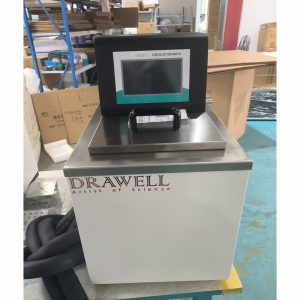
- Enzyme reactions and assays. Many enzyme‑based assays (like ELISA) require precise temperature control. Even a half‑degree shift can throw off reaction rates. Circulating water baths are especially good here because they eliminate cold spots and maintain high temperature uniformity across the bath. For these applications, we recommend using a water bath with temperature accuracy of ±0.1°C to ±0.2°C – Drawell’s SC‑series circulating baths, for example, offer ±0.1°C precision with a circulating pump to ensure even heating throughout the tank.
- Thawing frozen samples. Need to thaw a vial of cells or a tube of enzyme? The water bath does it quickly and safely. The key is to keep the sample moving and avoid prolonged immersion to prevent local overheating – gentle agitation goes a long way here.
- Media and reagent warming. Culture media, buffers, and reagents often need to be pre‑warmed to 37°C or 42°C before use. A water bath with a stable temperature ensures consistency across experiments.
Pro tip from the lab: Always use a floating tube rack or secure your samples properly. Submerging the caps can lead to contamination – use sealing film or screw‑cap tubes when possible.
Water Bath in Chemistry Labs
Chemists might not work with living cells, but they certainly care about temperature control – maybe even more so. A water bath offers a safe, indirect way to heat reaction mixtures without the risk of open flames or sudden hot spots.
- Distillation and evaporation. In rotary evaporation, the water bath provides a gentle, even heat source that drives off solvents without decomposing heat‑sensitive compounds. A common rule of thumb is the “20‑40‑60” guideline: set your condenser at 20°C, aim for a vapor temperature around 40°C, and keep your water bath around 60°C for efficient distillation. For high‑boiling solvents that require temperatures above 100°C, consider using an oil bath instead – water simply isn’t suitable beyond its boiling point.
- Temperature‑sensitive syntheses. Many organic reactions need controlled heating below 100°C. A water bath is perfect here because it heats evenly and won’t scorch your product. For reactions requiring temperatures between 35°C and 80°C, water baths are often the go‑to choice. When higher precision is needed (like ±0.1°C), a circulating water bath is the better option.
- Melting point determination. You’ll often see capillary tubes placed in a water bath to observe melting behavior. The gradual, uniform heating helps you get accurate readings.
- Reagent dissolution. Some solids simply won’t dissolve at room temperature. Gently warming the solvent in a water bath speeds things up without risking decomposition.
Key consideration for chemistry applications: Pay attention to temperature uniformity across the bath. If your water bath doesn’t have circulation, you may see temperature differences of 1-2°C between the center and the edges – enough to affect reaction kinetics. Circulating water baths eliminate this issue by constantly moving the water.
Water Bath in Medical Labs
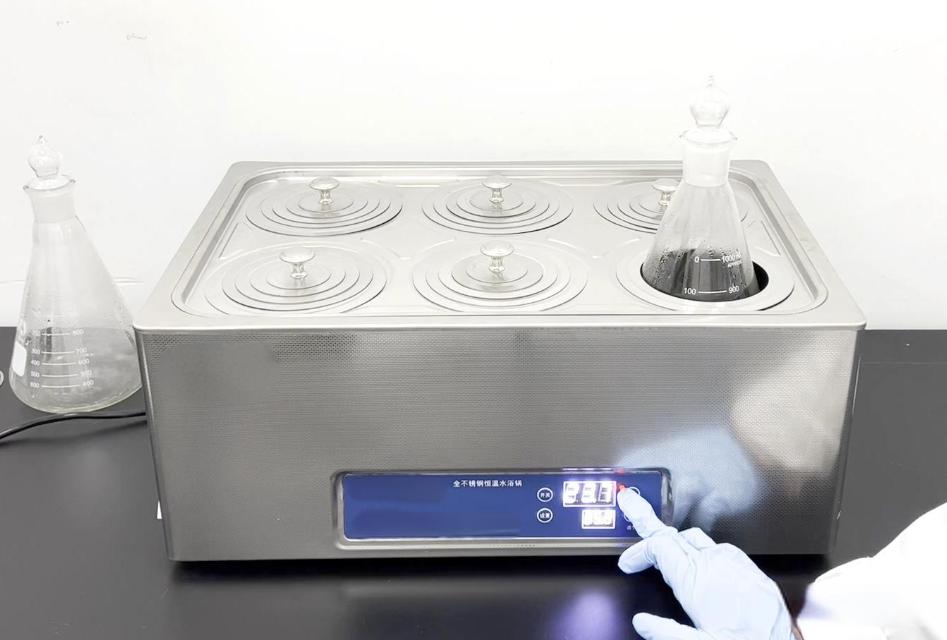
In clinical and medical laboratory settings, reliability is everything. Water baths are used daily to prepare samples and materials for diagnostic testing.
- Warming IV fluids and blood products. Frozen plasma and cold IV solutions need to be warmed to body temperature before transfusion. A water bath does this safely and evenly – far better than a microwave, which can create hot spots and damage blood cells. Dedicated plasma thawing baths maintain precise temperatures (usually around 37°C) and often include gentle agitation to speed up thawing without harming the product.
- Thawing Biological and Patient Samples: Frozen biological materials like tissue samples or cell suspensions are often thawed in a water bath to ensure they reach a usable temperature in a controlled manner. Serum, plasma, and urine samples stored frozen need careful thawing before analysis. Rapid or uneven thawing can alter analyte concentrations and lead to inaccurate results. A water bath set to 37°C with gentle circulation ensures consistent, reliable thawing.
- Incubating tests and assays. Many clinical chemistry and immunoassay procedures require incubation at specific temperatures (often 37°C or 56°C). Water baths provide the stable environment needed for consistent results across patient samples.
- Parasitology and microbiology setups. Wet mounts, culture preparations, and certain staining procedures benefit from temperature control. For parasitology exams, maintaining samples at 37°C keeps parasites active and easier to identify.
From the clinic: In busy hospital labs, we’ve found that water baths with built‑in timers and alarms are game‑changers. They prevent overnight samples from overheating and free up staff to focus on other tasks. Drawell’s DW‑W series thermostatic water baths, for example, feature independent LED displays for temperature and time settings, plus an overheating protection device – perfect for clinical environments where both precision and safety matter.
Water Bath in Food Science Labs
In food science laboratories, water baths are used for both quality control and research, particularly in areas related to food safety and microbial analysis.
- Quality testing and analysis. Fat content determination (like the Soxhlet method), protein analysis (Kjeldahl), and fiber analysis all involve temperature‑controlled steps. For detergent fiber analysis, rinse water typically needs to be at least 70°C to effectively remove non‑fiber components. A reliable water bath ensures these critical temperatures are maintained throughout the procedure.
- Sample preparation for sensory evaluation. Before a trained panel evaluates food products for taste, texture, or aroma, samples often need to be brought to a standard serving temperature. Water baths allow precise, reproducible temperature conditioning so sensory results are comparable across sessions.
- Enzyme and fermentation studies. Understanding how enzymes behave at different temperatures helps food scientists optimize processes like cheese ripening, bread proofing, and juice clarification. Water baths provide the controlled environments needed for these studies.
- Melting and tempering. Chocolate, butter, and fats often need gentle warming to specific temperatures for processing or analysis. Water baths prevent scorching and ensure even melting.
- Microbial Testing: Food science labs use water baths to incubate food samples for microbial growth tests, which are crucial for ensuring food safety.
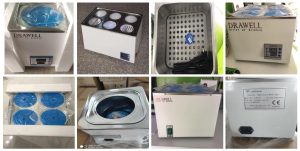
Practical insight: Food labs run on tight schedules and high sample volumes. Choosing a water bath with a larger capacity – say, 20 to 30 liters – can significantly boost throughput. Drawell offers HH‑series electric constant temperature water baths with capacities ranging from 3L up to 18.5L, available in configurations from 1 to 8 holes.
Water Bath in Pharmaceutical Labs
Pharmaceutical laboratories use water baths to ensure precise temperature control during drug development, stability testing, and quality control.
- Dissolution testing. This is one of the most important applications in pharma quality control. Dissolution apparatuses use water baths to maintain the dissolution medium at 37±0.5°C while tablets or capsules release their active ingredient. The water bath must provide exceptionally stable temperature control because even minor fluctuations can skew drug release profiles. According to USP standards, dissolution testing requires temperature accuracy of ±0.5°C at 37°C.
- Stability testing. Pharmaceutical products must be tested under various temperature conditions (typically 25°C, 30°C, 40°C) to determine shelf life, packaging requirements, and storage conditions. Water baths are used to maintain these exact temperatures throughout extended testing periods. ICH guidelines (the international standards for pharma stability testing) require precise temperature control – often within ±2°C – and water baths are a standard tool for achieving this.
- Analytical method validation. Many HPLC and other analytical methods require samples and mobile phases to be kept at specific temperatures. Water baths ensure consistent conditions across validation runs and routine sample analysis.
- Raw material and finished product testing. Viscosity measurements, pH adjustments, and other quality tests often require temperature‑controlled conditions. Having a reliable water bath that maintains its setpoint throughout the workday saves time and reduces retesting.
- What to look for in a pharma water bath: Temperature accuracy and documentation. For regulated environments, you’ll want a water bath with high precision (±0.1°C) and ideally a digital interface that records temperature data. Drawell’s SC‑series constant temperature water baths offer microprocessor control, large‑screen LCD displays, and ±0.1°C accuracy, making them well‑suited for quality control applications where traceability matters.
How to Choose the Right Water Bath for Your Lab
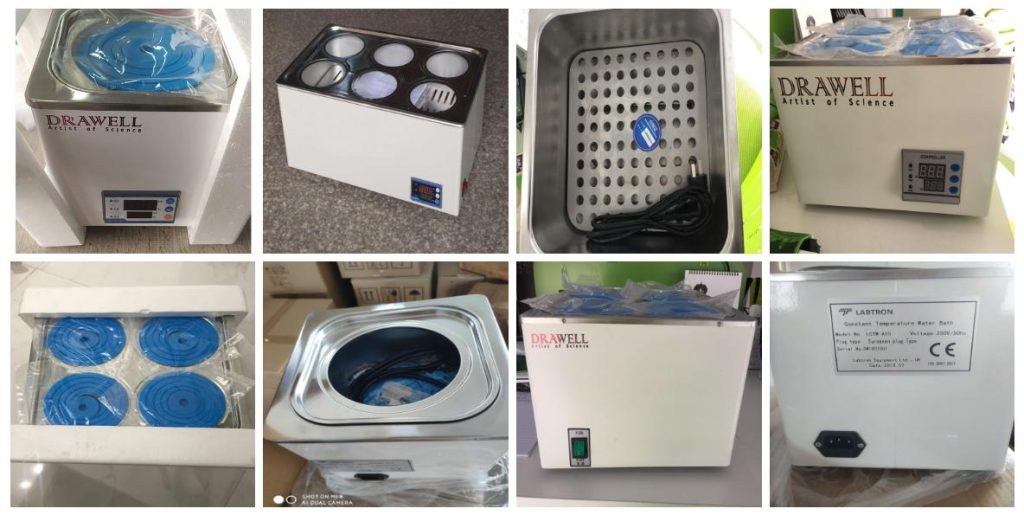
You’ve seen the applications – now the question is, which water bath actually fits your workflow? Here’s a quick rundown of the main types.
Types at a Glance
| Type | What It Does | Best For |
| General‑purpose / thermostatic water bath | Basic temperature control, good for routine heating and incubation | Warming media, thawing samples, general lab use |
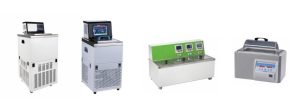
| Circulating water bath | Uses a pump to circulate water, eliminating temperature gradients | Applications requiring high temperature uniformity (enzyme reactions, pharmaceutical testing) |
| Shaking water bath | Combines heating with orbital or reciprocating shaking motion | Cell culture, bacterial culturing, hybridization, mixing samples |
| Low‑temperature / refrigerated bath | Cools water below ambient temperature, often using CFC‑free refrigeration systems | Molecular biology applications requiring low temperatures, protein crystallization |
| Oil bath | Uses oil as heating medium, reaching higher temperatures than water (up to 200°C or more) | High‑temperature syntheses, distillation of high‑boiling solvents |
How to Match the Type to Your Application
| If Your Work Involves… | Recommended Type | Why |
| Routine sample warming, media preparation | General‑purpose water bath | Cost‑effective, easy to use, covers most basic needs |
| Enzyme assays, microbiology incubation, dissolution testing | Circulating water bath | Uniform temperature distribution ±0.1°C eliminates cold spots |
| Cell culture, bacterial cultures requiring agitation | Shaking water bath | Gentle stirring improves oxygen transfer and growth uniformity |
| Protein work, DNA/RNA applications requiring cold temperatures | Refrigerated circulating bath | Cools below ambient while maintaining circulation for uniformity |
Key Selection Factors
Beyond type, here are the practical specs you’ll want to check:
- Temperature range. Most water baths cover from about 5°C above room temperature up to 100°C. For routine lab work, that’s plenty. If you need temperatures above 100°C or below room temperature, look at oil baths or refrigerated circulators.
- Temperature accuracy and uniformity. This is where quality matters. For sensitive applications like enzyme kinetics or pharmaceutical testing, aim for ±0.1°C accuracy. For general use, ±0.5°C is usually acceptable. And don’t forget uniformity – some baths have ±0.2°C uniformity at 37°C, which is excellent for cell culture work.
- Capacity and size. Think about your largest sample container and how many you typically run at once. A 5 to 12 liter bath works well for small routine work; 18 to 28 liters supports higher throughput. Also check internal dimensions – will your flasks or bottles actually fit?
- Control interface. Digital controls with LED or LCD displays make temperature setting and monitoring much easier than analog dials. Look for microprocessor control, which provides more consistent temperature regulation.
- Safety features. Over‑temperature protection, dry‑burn prevention (some models have built‑in water level detection), and independent drains for easy cleaning are worth having.
- Material and build quality. Stainless steel inner tanks resist corrosion and are easy to clean. Good insulation between inner and outer walls improves temperature stability and energy efficiency.
- Additional features. Timers, alarms, and programmable temperature ramping can be valuable depending on your workflow.
Frequently Asked Questions (FAQ)
Q1: Can I use tap water in my laboratory water bath?
Technically, yes, but we strongly recommend using distilled or deionized water. Tap water contains minerals that leave scale deposits on the heating element and tank walls, reducing heating efficiency and shortening the equipment’s life. Distilled water minimizes scale and microbial growth, keeping your bath cleaner and more accurate over the long term.
Q2: How often should I clean and maintain my water bath?
For most labs, we recommend draining, cleaning, and refilling the water bath at least once a week. Use a mild disinfectant or bleach solution (about 10% dilution) to prevent algae and bacterial growth. Some labs also run the bath at 90°C for 30 minutes weekly as a heat decontamination step. For calibration, check temperature accuracy monthly using a certified thermometer, and arrange a full professional calibration annually.
Q3: What is the maximum temperature a water bath can reach?
Standard water baths typically reach up to 99.9°C or 100°C. They can’t exceed the boiling point of water because the liquid would evaporate too rapidly. If you need higher temperatures (e.g., for certain syntheses or polymer work), consider an oil bath, which can operate at temperatures up to 200°C or more.
Q4: My water bath’s temperature display doesn’t seem accurate. How do I check it?
This is a common issue. The simplest check is to place a calibrated, certified thermometer directly into the water (not touching the bottom or sides) and compare its reading to the display after the bath has stabilized for at least 15 minutes. If the difference exceeds your acceptable tolerance, the bath needs calibration. Most digital water baths allow you to adjust temperature offset settings – refer to your instrument manual for the specific procedure.
Q5: Is a water bath safe for heating flammable or volatile chemicals?
Yes, and in fact, water baths are often preferred for heating flammable liquids because they lack open flames and exposed heating elements that could ignite vapors. However, always operate the bath in a well‑ventilated area or under a fume hood, never heat a bath fluid above its flash point, and avoid using water baths for pyrophoric or moisture‑sensitive reactions.
Q6: How do I prevent algae and bacteria from growing in my water bath?
Algae and microbial growth are nuisances in any lab that uses water baths regularly. The best prevention is routine maintenance: use distilled water, change it weekly, and wipe down the tank surfaces. You can also add a commercially available water bath treatment or a small amount of copper sulfate solution (if compatible with your lab’s policies) to inhibit growth. Running the bath at 90°C for 30 minutes once a week is also very effective for heat‑based decontamination.
Q7: What’s the difference between a water bath and a dry bath (block heater)?
Great question. A water bath uses liquid water to transfer heat indirectly, providing gentle, uniform heating ideal for biological samples and larger volumes. A dry bath uses metal blocks to directly heat tubes and microplates – it’s faster, contamination‑free (no water to clean), and more energy‑efficient, but it can only handle small sample sizes and may not heat as evenly as a circulating water bath. For most molecular biology applications like enzyme digestions or PCR prep, dry baths are perfectly fine. For anything requiring larger volumes or extreme temperature uniformity, stick with a water bath.
Ready to find the right water bath for your lab? Browse Drawell’s full range of water baths, circulators, and dry baths, or contact our team to discuss your specific application needs. We’re here to help you get the right equipment for the job.
Get Quote Here!
Latest Posts

What Next?
For more information, or to arrange an equipment demonstration, please visit our dedicated Product Homepage or contact one of our Product Managers.


