

Biochemistry Analyzer

Biochemistry Analyzer
Drawell offers fully automatic and semi-automatic biochemistry analyzers for different laboratory workloads. The range covers compact 200 tests/hour systems up to 600 tests/hour automatic analyzers, with options for STAT testing, refrigerated reagents, automatic dilution, QC management and open reagent methods.
Choose the analyzer according to daily sample volume, required throughput, sample and reagent capacity, automation level and available laboratory space.
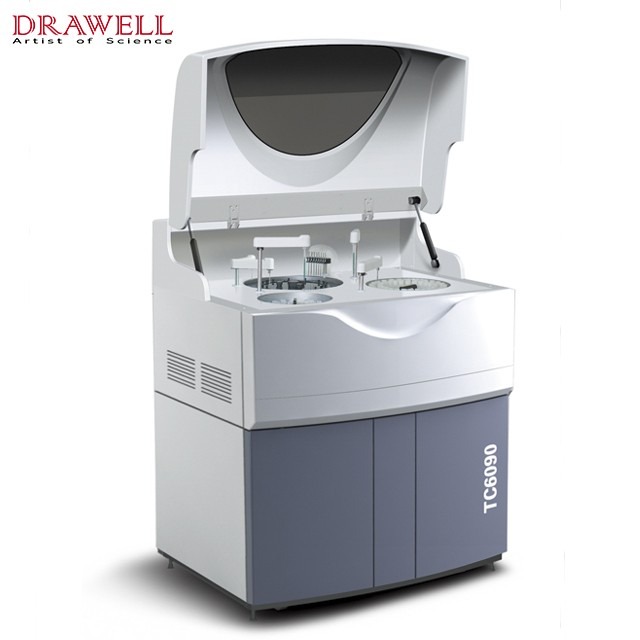
Features of Biochemistry Analyzer
- Fully automatic, discrete, random STAT function.
- Online test items.
- Analysis Method: end-point, kinetic, two-point, double-reagents, double-wavelength, multi-standard, etc, open to various reagents.
- Data Processing.
- Various QC managements, insert QC randomly; save, display & print QC chart; define different QC in advance.
- Calibration: linear/nonlinear multi-point calibration.
- Re-test: retest the sample automatically when the result is out of the linearity range or the sample is not sufficient
- Cleaning System,8-step automatic washing, automatic cuvette dry function.
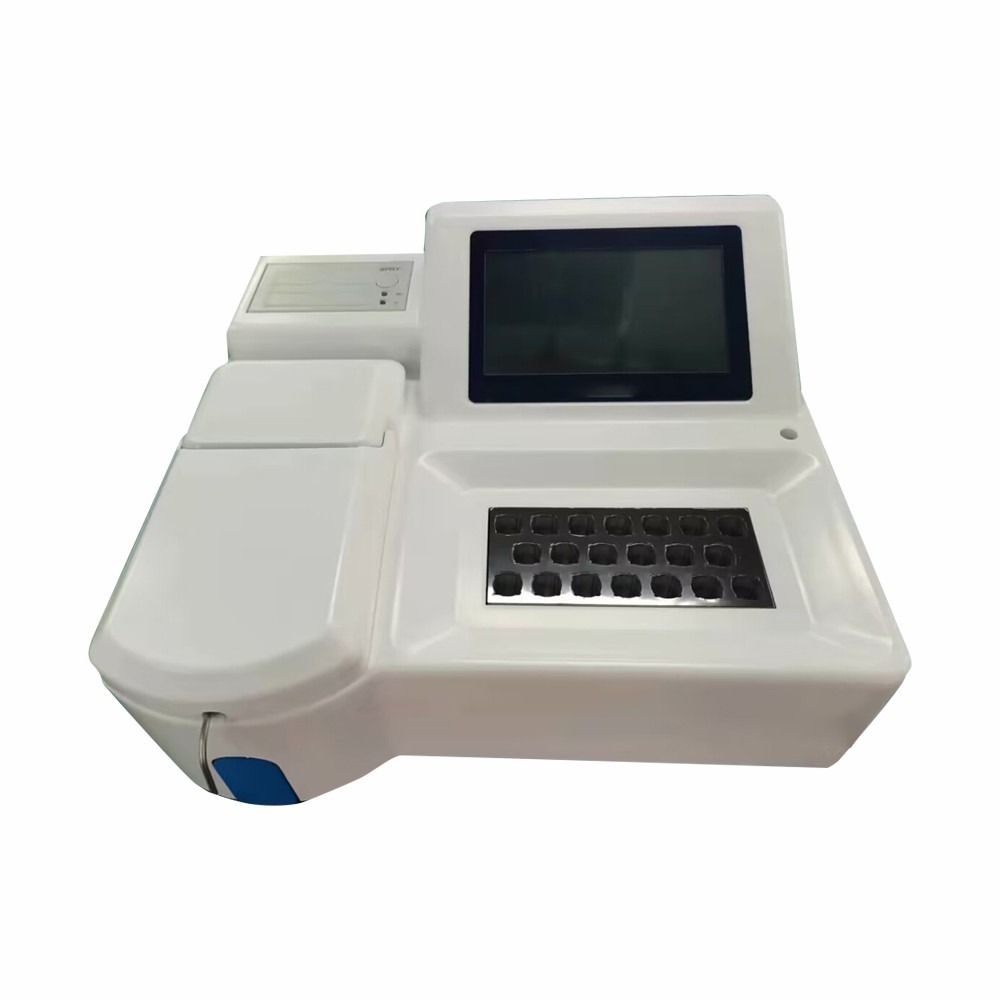
Applications of Biochemistry Analyzer
1. Liver function test: total bilirubin, direct bilirubin, total protein, albumin, alanine aminotransferase, aspartate aminotransferase, γ-glutamyltransferase, alkaline phosphatase.
2. Examination of renal function: urea (UREA), creatinine (CREA), uric acid (UA).
3. Blood lipids: total cholesterol (TC), triglyceride (TG), low-density lipoprotein cholesterol (LDL-C), high-density lipoprotein cholesterol (HDL-C), apolipoprotein (ApoA1), apolipoprotein ( ApoB).
4. Blood sugar: Glucose (Glu), glycosylated hemoglobin (HbA1C) detection.
5. Three items of rheumatism: C-reactive protein, antistreptolysin O, and rheumatoid factor.
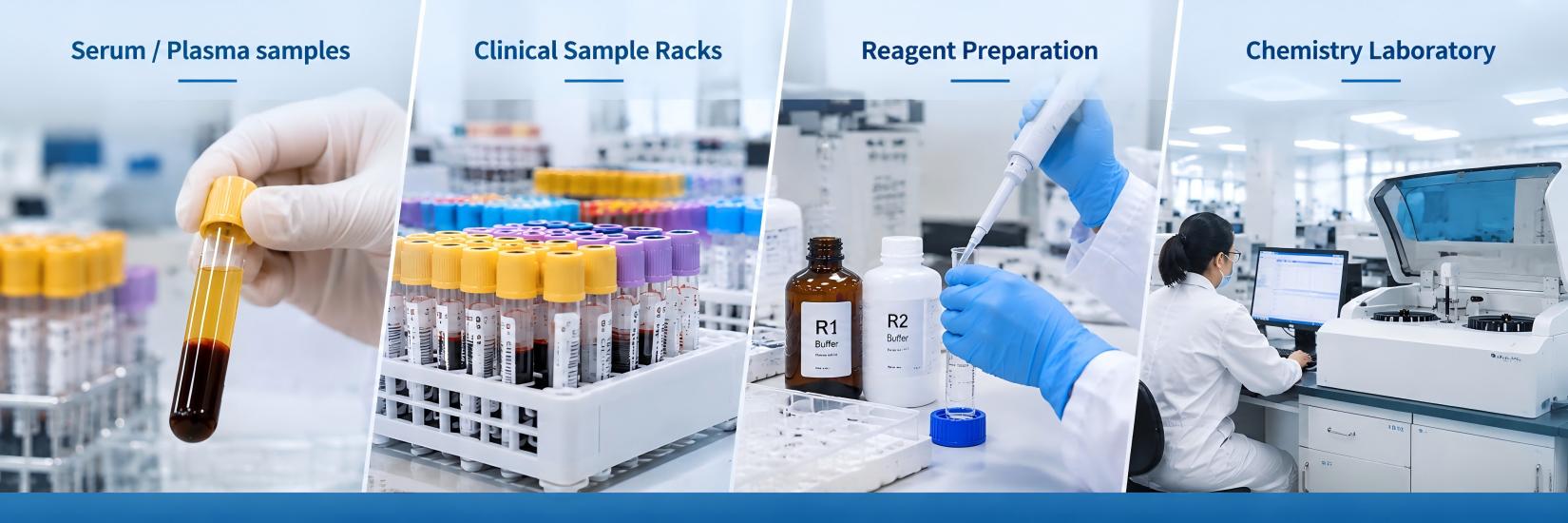
How to Choose the Biochemistry Analyzer?
- Start with Daily Test Volume
Do not select an analyzer only by maximum throughput. Consider your normal daily workload, peak-hour sample volume and whether STAT samples need to be inserted during routine testing.
Drawell range: 200–600 tests/hour for fully automatic models.
- Check Sample and Reagent Capacity
Higher throughput is useful only when the analyzer also provides enough sample and reagent positions for your workflow.
For example:
- TC6030: 40 samples / 40 reagents
- TC6090: 93 samples / 80 reagents
- TC800: 110 or 165 samples / 80 or 120 reagents
- Automatic or Semi-Automatic?
Choose a fully automatic model when reducing manual sample and reagent handling is important.
Choose a semi-automatic analyzer when sample volumes are lower and manual operation is acceptable.
- Check Reagent Compatibility
Several Drawell fully automatic models use an open reagent system and support end-point, kinetic, two-point, double-reagent, double-wavelength and multi-standard methods.
Before ordering, confirm the reagent method and required analyzer settings for the assays used by your laboratory.
- Check Sample Volume
- TC800: 1–50 μL
- TC6090: 2–50 μL
- TC6030: 2–50 μL
- Check Optional ISE Requirements
If K, Na, Cl or other electrolyte testing is required, confirm the available ISE configuration before ordering, as ISE options differ by model.
- Confirm Installation Conditions
- Power supply
- Available bench/floor space
- Water consumption
- Operating temperature and humidity
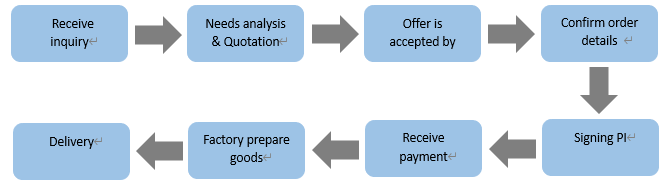
Order Process