


If you are stepping into elemental analysis, you have likely run into a classic laboratory dilemma: ICP-OES vs. ICP-MS. Both are heavyweights in modern analytical chemistry, offering incredible insight into sample composition. However, picking the wrong technique can lead to a massive waste of laboratory budget, high operational downtime, or inadequate detection limits.
In this article, we will delve deep into the difference between ICP-OES and ICP-MS, breaking down their respective strengths, practical limitations, and applications. Whether you are a scientist, researcher, laboratory manager, or procurement analyst, this hands-on comparison will give you the clarity needed to make an informed investment. Let’s look at the seven key technical and operational factors that set them apart.
1. Principle and Working Mechanism in ICP-OES VS ICP-MS
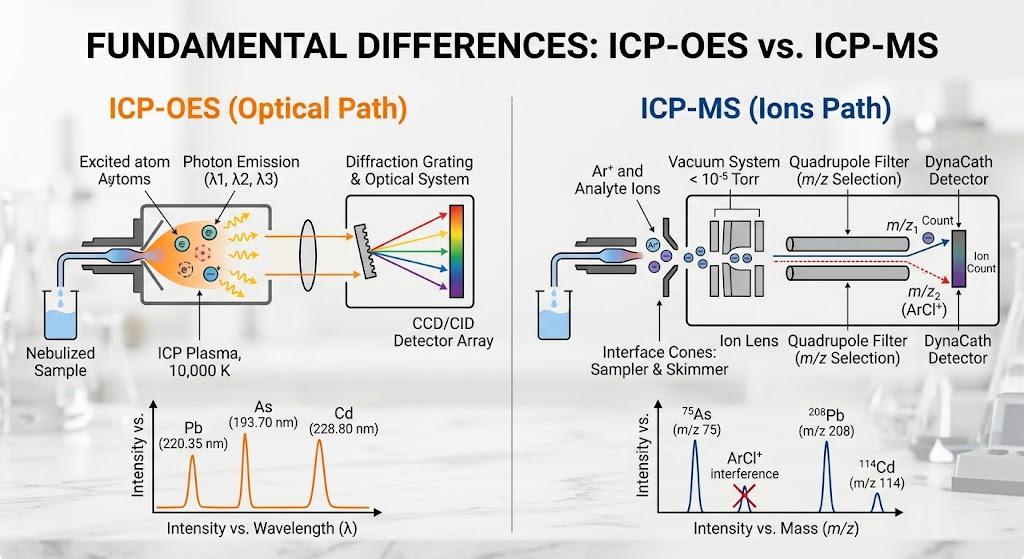
ICP-OES: ICP-OES measures elemental concentrations by exciting atoms in a sample using an inductively coupled plasma source and then detecting the emitted light at characteristic wavelengths.
Think of ICP-OES as a high-tech light sensor. When your liquid sample is atomized into the 10,000 Kelvin argon plasma, electrons jump to higher energy states. As they cool down, they emit a unique fingerprint of light (photons). By measuring the exact intensity of this light, the instrument calculates how much of that element is present.
ICP-MS: ICP-MS measures elemental concentrations by ionizing the atoms in a sample using an inductively coupled plasma source and then separating and detecting the ions based on their mass-to-charge ratios.
Instead of measuring light, an ICP-MS uses the plasma simply as an ion source to strip electrons away. It literally sucks these charged ions into a high-vacuum quadrupole mass spectrometer zone. The ions are filtered strictly by their atomic weight (mass-to-charge ratio, m/z). Because it counts individual ions rather than processing wavelengths, it functions on a fundamentally more sensitive physical layout.
2. Detection Limits and Sensitivity in ICP-OES VS ICP-MS
ICP-OES: ICP-OES typically has higher detection limits compared to ICP-MS, ranging from parts per million (ppm) to parts per billion (ppb).
While “higher” sounds like a drawback, it is actually a sweet spot for major element quantification. For routine laboratory workflows, an ICP-OES safely delivers stable detection limits down to 0.1 to 10 ppb for most metals. If you are analyzing high-concentration samples like alloys or fertilizers, this is exactly what you need.
ICP-MS: ICP-MS offers lower detection limits, typically in the parts per trillion (ppt) range, making it more sensitive for trace elemental analysis.
If your work demands extreme precision, ICP-MS is unparalleled. It routinely hits sub-ppt to ppq (parts per quadrillion) detection limits. To put this into perspective, if you need to detect toxic heavy metals like Lead (Pb), Cadmium (Cd), or Mercury (Hg) in drinking water at trace contaminant thresholds, an ICP-MS can spot a single drop of pollutant dissolved in an entire Olympic-sized swimming pool.
3. Elemental Range and Resolution in ICP-OES VS ICP-MS
ICP-OES: ICP-OES covers a broad range of elements, including metals and non-metals. It offers moderate resolution, allowing the measurement of multiple elements simultaneously.
It is highly effective at screening major, minor, and some trace elements all at once. The resolution is robust enough to separate most close wavelengths, utilizing high-performance Echelle optical systems to process complex emission spectra without overlapping lines slowing down your run.
ICP-MS: ICP-MS has a wider elemental range, including both major and trace elements. It provides excellent resolution, enabling the measurement of isotope ratios and the determination of isotopes.
Because it operates at an atomic mass level, it doesn’t just tell you that Lead is in your sample—it breaks down the exact isotopic ratios (e.g., ²⁰⁶Pb, ²⁰⁷Pb, ²⁰⁸Pb). This feature is vital for geochemistry sourcing, nuclear forensics, and tracking environmental contamination sources. Furthermore, its linear dynamic range covers 9 orders of magnitude (10⁹), meaning you can measure ultra-trace levels and high-ppm concentrations in a single analytical run without spending hours performing tedious serial sample dilutions.
4. Sample Throughput and Analysis Time in ICP-OES VS ICP-MS
ICP-OES: ICP-OES generally has higher sample throughput due to its faster analysis time. It can analyze multiple samples per hour.
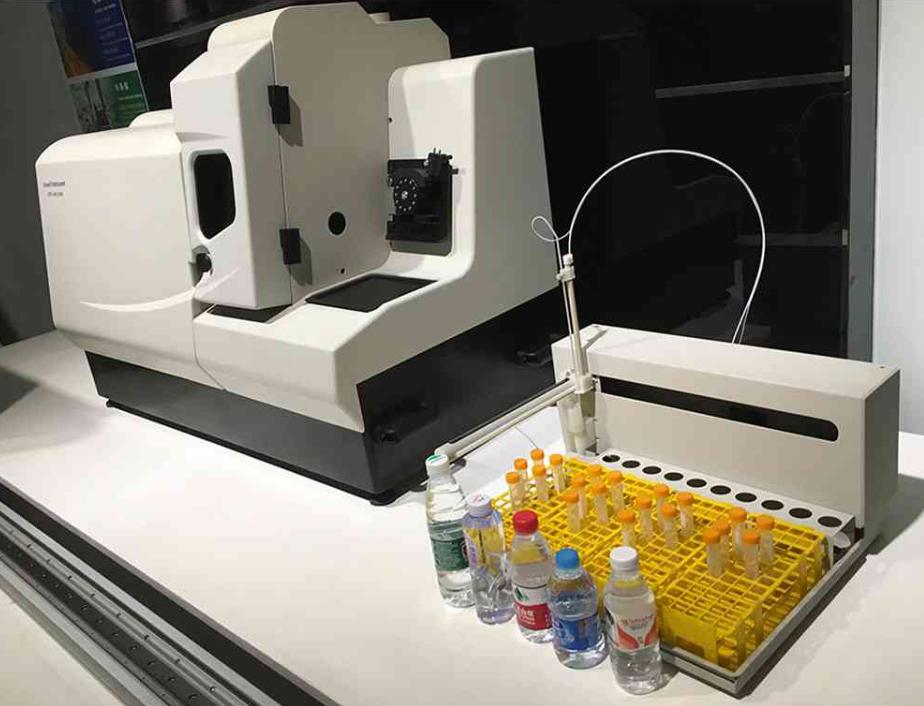
Because an ICP-OES utilizes an all-wavelength, direct-reading optical detector, it can analyze 60+ elements simultaneously in under 30 seconds per sample. Whether you throw 2 elements or 40 elements at it, the runtime stays identical. This makes it an absolute workhorse for high-volume commercial testing labs.
ICP-MS: ICP-MS has a lower sample throughput compared to ICP-OES because the analysis time for each sample is longer due to the additional steps involved in ionization and mass separation.
The quadrupole mass filter must rapidly scan through mass numbers sequentially. If you are tracking a long list of elements, the dwell time for each mass builds up, taking roughly 2 to 3 minutes per sample. While still fast, this extended runtime translates directly to higher consumption of high-purity argon gas per sample batch.
5. Matrix Effects and Interference Management in ICP-OES VS ICP-MS
ICP-OES: ICP-OES is more susceptible to matrix effects and interferences due to spectral overlap. Techniques like background correction and standard addition may be used to mitigate these effects.
The primary hurdle in ICP-OES is spectral line overlap—where one element’s emission line sits right on top of another. Analysts resolve this by carefully selecting alternative secondary wavelengths or applying automated background correction software to isolate the target peak.
ICP-MS: ICP-MS is less prone to matrix effects, but it can still experience isobaric interferences. Collision/reaction cell or high-resolution mass spectrometry can be employed to minimize these interferences.
In mass spectrometry, the main challenge is polyatomic interference. A classic example occurs when analyzing Arsenic (⁷⁵As) in a matrix containing chlorine: the plasma’s Argon combined with sample Chloride forms an ⁴⁰Ar³⁵Cl⁺ molecule, which shares the exact same atomic mass of 75.
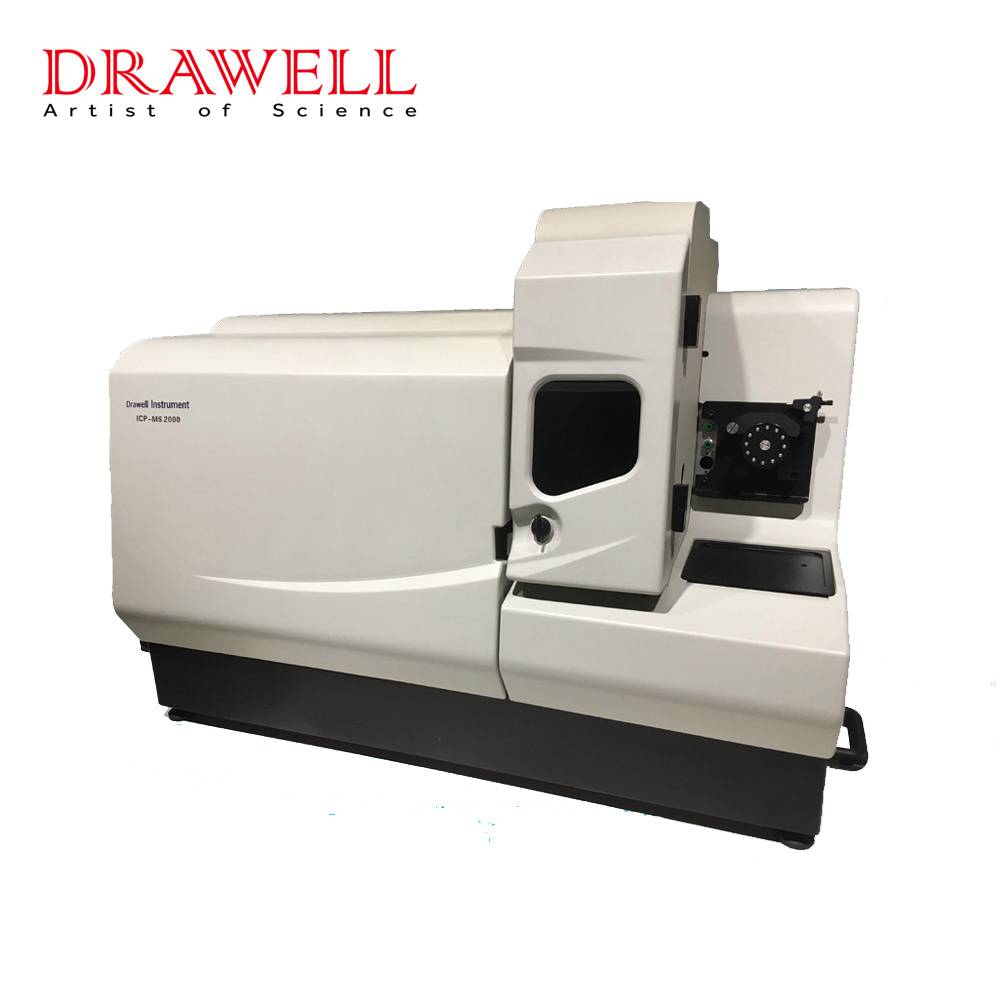
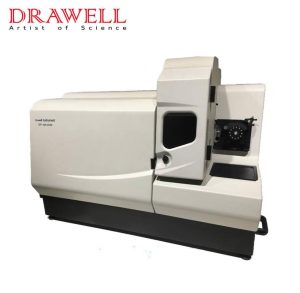
To defeat this, advanced systems like the Drawell ICP-MS 2000 Inductively Coupled Plasma Mass Spectrometer incorporate high-efficiency extraction lenses and integrated collision technology to physically screen out these polyatomic species, providing pristine data for ultra-trace workflows.
6. Cost Considerations in ICP-OES VS ICP-MS
ICP-OES: ICP-OES instruments are generally less expensive compared to ICP-MS systems. They have lower operational costs and require fewer consumables.
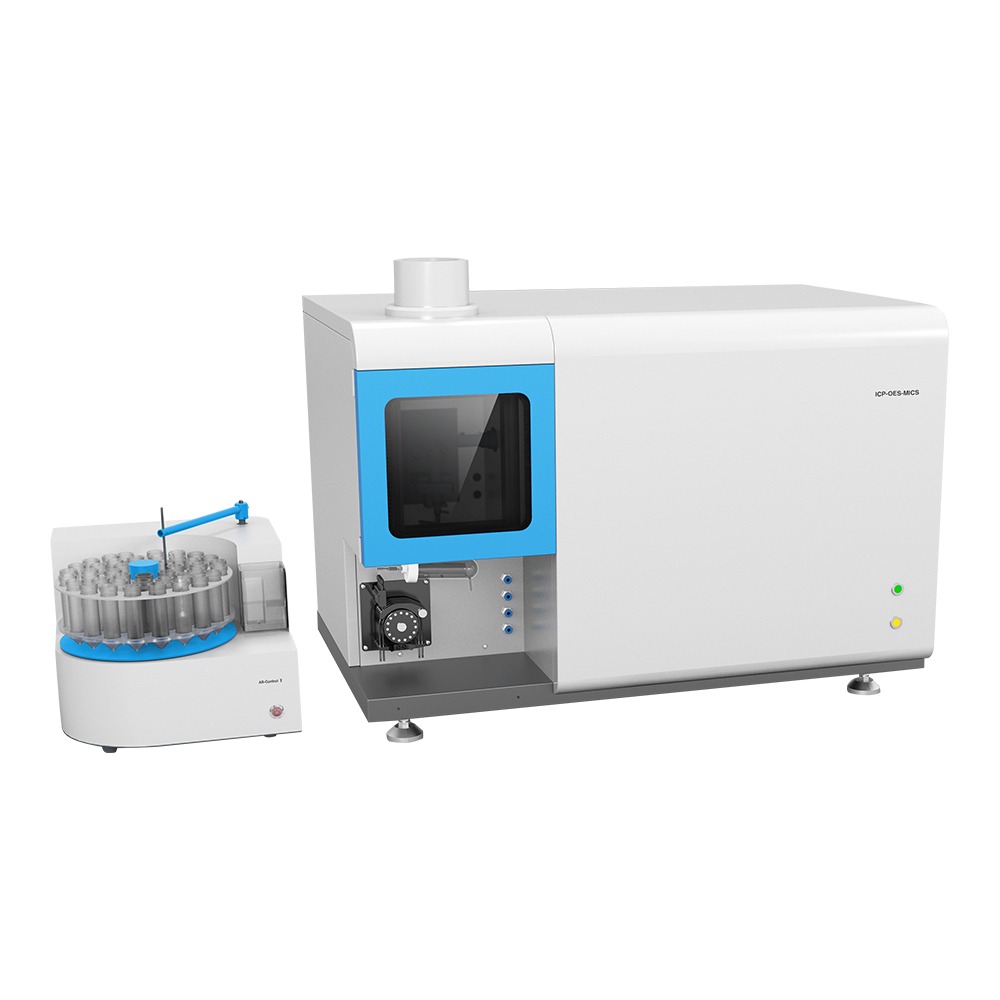
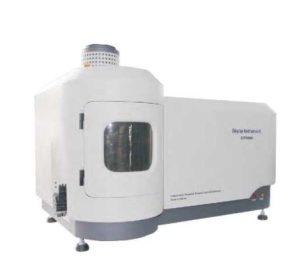
If your target testing limits sit comfortably within the ppb range, investing in an ICP-OES delivers a much faster Return on Investment (ROI). The purchase cost is highly competitive, and routine maintenance is straightforward. For laboratories focused on cost-effective, high-accuracy routine testing, implementing a budget-friendly benchtop system like Drawell’s DW-ICP-OES3000 Optical Emission Spectrometer offers a reliable entry point without draining capital expenditure, using standard consumables like simple quartz torches and peristaltic tubing.
ICP-MS: ICP-MS instruments are more expensive, both in terms of initial purchase and ongoing maintenance. They require specialized consumables and gases, increasing the operational costs.
An ICP-MS demands a significantly higher capital expenditure up front. Operationally, you are also maintaining a complex high-vacuum system. Its core consumables include precision-engineered platinum or nickel sampling & skimmer cones, which slowly wear out under high-acid matrices and require routine replacement to avoid mass-calibration drift.
7. TDS Matrix Tolerance and Application Suitability in ICP-OES VS ICP-MS
Beyond sensitivity and budget, the difference between icp oes and icp ms is heavily dictated by how much “dirt” your instrument can ingest and which industry workflows they are designed to handle.
ICP-OES Hardiness & Applications: An ICP-OES is highly resilient. Equipped with a heavy-duty, high-salt nebulizer, it can directly analyze samples containing up to 10% to 30% Total Dissolved Solids (TDS) (such as brines or mineral digestions) without choking the flame.
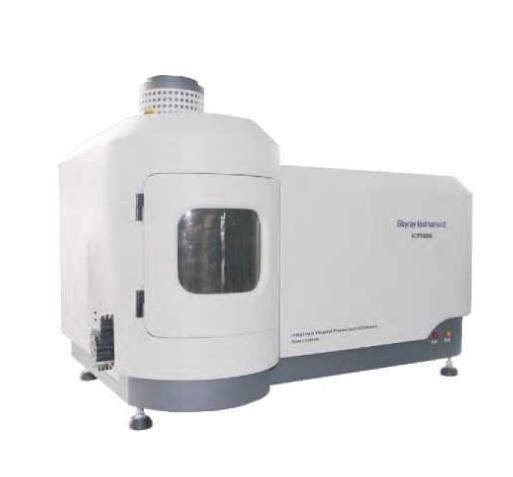
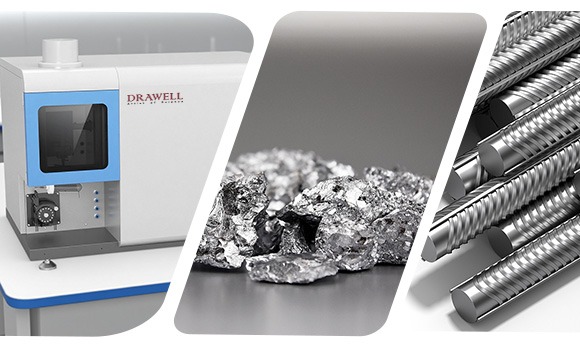
For instance, when dealing with complex organically loaded matrixes like crude oil, lubricants, or heavy polymers, industrial labs rely on dedicated systems like the Drawell ICP700T Petrochemical Version (Full-Spectrum Direct-Reading ICP-OES) which utilizes full-spectrum direct reading to capture ultra-fast multi-element snapshots before complex matrix suppression can destabilize the torch. This makes ICP-OES the absolute industry workhorse for routine environmental monitoring of wastewater, soil macro-nutrients in agriculture, or metallurgical alloy analysis in foundries.
ICP-MS Fragility & Applications: Conversely, an ICP-MS interface orifice is exceptionally narrow (typically around 1.0 mm for the sample cone and 0.4 mm for the skimmer cone). Therefore, it requires your sample’s TDS to be strictly below 0.2%. Feeding high-salt matrices directly into an ICP-MS causes rapid cone clogging, signal loss, and sudden emergency maintenance shutdowns.
However, where matrices can be clean or heavily diluted, ICP-MS is the gold standard for trace elemental analysis and isotopic ratio determination. When strict compliance standards tighten, it becomes non-negotiable—essential for clinical blood toxicology labs checking for heavy metal poisoning, semiconductor manufacturers scanning for ultra-pure chemical contaminants, or pharmaceutical companies enforcing stringent USP <232> / <233> elemental impurity regulations.
📊 Comprehensive ICP-OES vs. ICP-MS Parametric Overview
To help you summarize the difference between icp oes and icp ms at a single glance, our application specialists have mapped out this high-level technical reference matrix:
| Analytical Parameter | ICP-OES | ICP-MS |
| Typical Detection Limit | 0.1 – 10 ppb (parts per billion) | <0.1 – 1 ppt (parts per trillion) |
| Linear Dynamic Range | 6 Orders (10⁶) | 9 Orders (10⁹) |
| Throughput (Multi-element) | High (~30-60 seconds per sample) | Moderate (~2-3 minutes per sample) |
| TDS Matrix Tolerance | Excellent (Up to 10% – 30%) | Strict (Must be <0.2%) |
| Primary Interferences | Spectral overlaps (light lines) | Polyatomic & Isobaric ions (mass weight) |
| Isotope Analysis? | No | Yes |
| Capital & Running Costs | Economical, low daily consumable cost | Premium investment, specialized cones & vacuum upkeep |
| Regulatory Fit | US EPA 6010D, routine industrial QA/QC | US EPA 200.8, USP <232>/<233> compliance |

In conclusion, the comparison between ICP-OES and ICP-MS reveals significant differences in terms of principles, detection limits, sensitivity, elemental range, resolution, sample throughput, interference management, and cost considerations. ICP-OES excels in the rapid analysis of elements at higher concentrations, making it suitable for routine analysis in various industries. On the other hand, ICP-MS offers superior sensitivity, lower detection limits, and excellent resolution, making it ideal for trace elemental analysis and isotopic ratio determination. The choice between ICP-OES and ICP-MS ultimately depends on the specific requirements of the analytical task at hand.
As elemental analysis continues to play a critical role in fields such as environmental monitoring, pharmaceuticals, geology, and forensics, understanding the differences between ICP-OES and ICP-MS empowers scientists and analysts to select the most suitable method for their specific applications. By harnessing the power of these advanced analytical techniques, researchers can unlock new insights into the elemental composition of diverse samples, driving innovation and progress across numerous industries.
Need Expert Help Mapping Out Your Lab Configuration?
Choosing the right spectrometer configuration depends entirely on your daily sample matrix, target throughput, and budget constraints. Contact the application chemistry team at Drawell today for a tailored feasibility assessment, instrument ROI profile, or an obligation-free technical quotation.
Get Quote Here!
Latest Posts

What Next?
For more information, or to arrange an equipment demonstration, please visit our dedicated Product Homepage or contact one of our Product Managers.


