


Gas chromatography (GC) is a pretty versatile analytical technique, used to separate, identify, and quantify volatile along with semi-volatile compounds found in complicated mixtures. Because it’s extremely sensitive, accurate, and runs efficiently, GC has turned into an important tool in a lot of scientific as well as industrial work. It’s used everywhere really, not only in research labs, but also in day to day quality control, and in regulatory testing too.
The folliowing sections describe 10 key ways gas chromatography is applied, kinda showing how this method helps with safety, quality assurance, and even technological progress across multiple industries.

Why Gas Chromatography is Widely Used in Various Industrial Applications
Understanding why gas chromatography is applied so widely, means looking at its technical strengths and practical benefits in various industrial settings.
1. High Accuracy and Analytical Precision
One of the main reasons industries lean on gas chromatography is its impressive accuracy. In practice, GC can detect and also measure chemical constituents even when they are present only at trace levels. That makes it especially suitable for complex mixtures, where tiny impurities can affect product quality, and also safety in a direct way.
This precision becomes crucial in places like pharmaceuticals and petrochemicals. There, strict specifications have to be met, without compromise. Even small shifts in the composition, can cause product failure, or trigger regulatory non-compliance, and gas chromatography helps avoid those outcomes through analytical results that stay dependable.
2. Excellent Sensitivity
Gas chromatography is highly sensitive and it can spot really tiny amounts of volatile compounds. Because of that, it’s quite useful for environmental testing, forensic analysis, and quality control tasks, especially when contaminants are only present at trace levels and you cannot really see them otherwise.
Being able to recognize pollutants, leftover solvents, or harmful substances in very small quantities helps industries keep safety requirements, and also reduces the environmental footprint.
3. Fast and Efficient Analysis
Speed is another major plus for gas chromatography. When you compare it with many other analytical methods, GC gives a quick separation and detection of compounds. This efficiency matters a lot in industrial settings, where fast decisions are required to keep production running, and to prevent expensive shutdowns.
That quick turnaround also supports real-time or near real-time monitoring of processes, so operators can tweak the conditions fast and tune performance.
4. Strong Support for Quality Control and Compliance
Industrial production needs real strict observance of quality standards, plus regulatory guidelines. Gas chromatography helps with that by giving precise chemical profiling of raw material, intermediates, and the final product. You can use it when there are multiple steps and you need consistency, even if the batch looks slightly different. Also, regulatory agencies often ask for GC data for product approval, mainly in pharmaceuticals, food safety, and environmental compliance. Because the results are reliable it becomes a trusted approach for proving alignment with international standards, not just internal claims.
5. Effective Separation of Complex Mixtures
A lot of industrial samples include complex chemical mixes that are hard to examine with other analytical methods. Gas chromatography performs well because it separates those mixtures into individual components, so you can do a detailed look at each substance inside.
That separation matters for impurity detection, and also for clarifying product composition. Over time it supports process improvements in manufacturing, and helps teams adjust conditions based on what is actually present.
6. Integration with Advanced Detection Systems
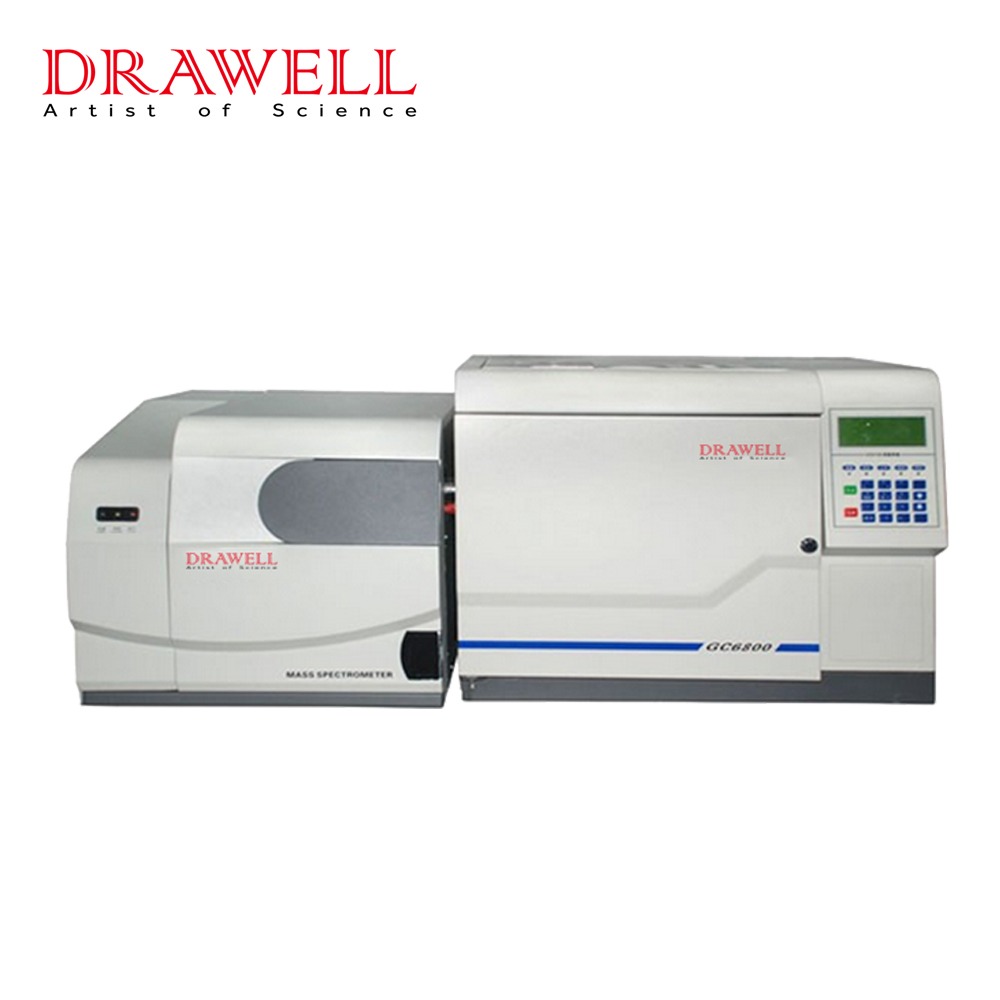
Gas chromatography can be paired with advanced detectors, for instance, gas chromatography and mass spectrometers (GC-MS), flame ionization detectors (FID), and electron capture detectors (ECD). When these are linked, the analytical power gets stronger since GC can support qualitative checking as well as quantitative measurement with strong specificity, and that is a real benefit.
Because of that, there is more flexibility too. Industries can adapt the GC setup to what they actually need to measure, and in practice this boosts accuracy , while also widening the range of possible uses.
7. Support for Process Optimization
In industrial production, GC is used not only for final product review, but also for watching the process while it is running. By tracking chemical shifts in near real time, it helps staff adjust reaction parameters, increase output, and limit waste.
As a result, operations become more efficient, production costs tend to drop, and product consistency improves across large scale manufacturing.
Key Applied Industries of Gas Chromatography
1. Environmental Monitoring and Pollution Analysis
Gas chromatography is widely used to examine environmental samples like air, water, and soil, sometimes even sediment, too. It is especially effective for spotting volatile organic compounds, pesticides, and industrial contaminants. Those measurements support regulatory agencies as well as environmental organizations to appraise pollution levels and apply protection rules. By detecting dangerous materials at trace quantities, GC gives a meaningful contribution toward keeping ecosystems in balance and protecting public health.
2. Pharmaceutical Quality Control and Drug Development
In the pharmaceutical industry, gas chromatography is vital, really it’s used for verifying drug safety and effectiveness, in a steady way. People commonly rely on it to catch residual solvents, hidden impurities, and degradation products that may appear in pharmaceutical formulations. While a drug is still being developed, GC gives detailed chemical profiles, which support formulation adjustment and quality assurance, in practical terms. Its accuracy helps meet strict regulatory rules and pharmacopeial requirements, so the paperwork stays clean.
3. Petrochemical and Hydrocarbon Analysis
Gas chromatography also shows up everywhere in crude oil, natural gas, and refined petroleum product analysis. It helps figure out hydrocarbon composition, fuel cleanliness, and chemical characteristics like octane number and sulfur content. These data points matter for refining operations, fuel quality control, and for improving energy production decisions. In addition, GC supports adherence to environmental and industrial standards across the energy sector.
4. Food and Beverage Safety and Authentication
Gas chromatography is applied in the food industry to help guarantee safety, quality and authenticity, which is why it shows up a lot. It’s used to examine flavor compounds , aroma profiles, preservatives, and pesticide residues. The same approach can also reveal food adulteration and confirm whether ingredients truly match the labeled source. In drinks, GC helps quantify alcohol levels as well as other volatile compounds that shape taste and smell, so products stay consistent and people remain satisfied.
5. Forensic Science and Toxicology
Gas chromatography works as a central analytical tool in forensic work and toxicology research. It’s commonly used to uncover drugs, alcohol, toxins, and leftover chemical residues in biological materials, like blood and urine. When paired with mass spectrometry, GC delivers very precise substance identification, so it becomes invaluable for criminal investigations, workplace testing for drug use, and medical toxicology.
6. Industrial Process Monitoring and Control
In chemical manufacturing and industrial production, gas chromatography is used to keep an eye on raw materials, intermediates, and final products, you know, that whole flow. It offers real time or near real time data that helps tune the reaction conditions and keep product quality steady. This application matters a lot for improving throughput, cutting down waste, and keeping industrial operations running in a stable way
7. Clinical and Biomedical Research
GC is also used in biomedical studies to examine metabolites, hormones, fatty acids, and other biological substances. It backs research into metabolic disorders, disease recognition, and biochemical pathways, sometimes researchers want extra resolution. In clinical labs, gas chromatography helps deliver reliable diagnostic information that supports medical decisions, and also patient care.
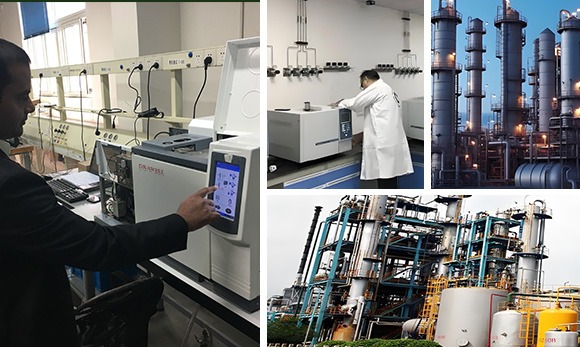
8. Air Quality Monitoring and Emission Control
Gas chromatography is used a lot, to track air pollutants and emissions from industry. It can pick up volatile organic compounds, as well as hazardous air pollutants that are released from factories, vehicles, and other industrial practices. People rely on this output to judge air quality, enforce environmental rules, and figure out plans for lowering emissions while also improving sustainability.
9. Materials Science and Polymer Analysis
In materials science GC shows up for polymer analysis, resins, coatings, and plastics. It figures out residual monomers and additive residues, plus other vapor byproducts that can alter how a material performs, or even how safe it is. This kind of use helps with product development, regular quality checks, and durability testing over long time spans for industrial materials.
10. Natural Products and Essential Oil Analysis
Gas chromatography is widely used to analyze natural products like essential oils, plant extracts, and fragrances. it helps in pinning down and measuring volatile compounds that contribute to the smell and therapeutic qualities, in general. This technique is especially relevant within perfume manufacturing cosmetic production and herbal research for product development, checking consistency, and confirming authenticity.

The Working Process When Gas Chromatography is Applied
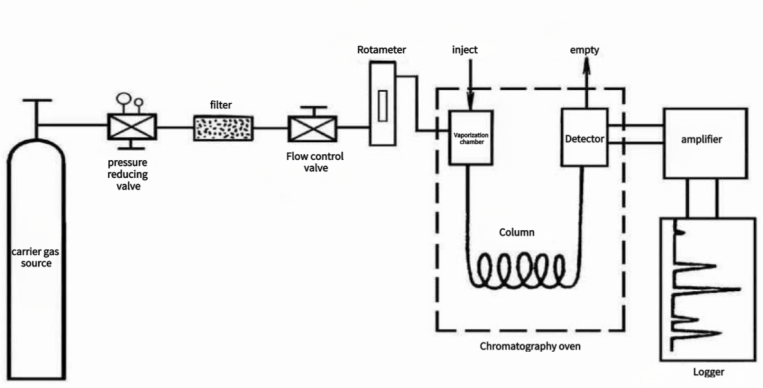
| Stage | What Happens During the Process | Key Equipment | Purpose |
| 1. Sample Collection | A representative sample is taken from industrial, environmental, or biological sources | Sampling containers, vials, syringes | Ensures the test material accurately reflects real-world conditions |
| 2. Sample Preparation | The sample is cleaned, filtered, diluted, or chemically modified if needed | Solvents, centrifuges, filtration systems, derivatization reagents | Improves compatibility with GC system and ensures reliable results |
| 3. Sample Injection into GC System | A small, controlled amount of sample is introduced into the instrument | Auto-sampler or manual injector | Provides precise and repeatable sample introduction |
| 4. Vaporization Stage | The injected sample is rapidly heated and converted into gas phase | Heated injection port (inlet) | Converts liquid sample into vapor for separation |
| 5. Carrier Gas Flow | An inert gas transports vaporized sample through the system | Helium, nitrogen, or hydrogen supply | Moves analytes through the column without chemical reaction |
| 6. Separation in Column | Components separate based on volatility and interaction with stationary phase | Capillary or packed column | Achieves separation of complex chemical mixtures |
| 7. Interaction with Stationary Phase | Compounds interact differently with column coating material | Stationary phase lining inside column | Determines retention time and separation efficiency |
| 8. Detection Stage | Separated compounds are detected as they exit the column | FID, TCD, ECD, GC-MS detectors | Converts chemical components into measurable signals |
| 9. Signal Processing | Detector outputs are recorded and converted into chromatograms | Data acquisition system, chromatography software | Produces peaks representing individual compounds |
| 10. Identification of Compounds | Substances are identified by comparing retention times or mass spectra | Reference libraries, calibration standards | Determines the chemical identity of each component |
| 11. Quantification | Concentration of each compound is calculated based on peak area or height | Calibration curves, analytical software | Provides accurate measurement of component amounts |
| 12. Data Interpretation and Reporting | Results are analyzed and compiled into reports for decision-making | Laboratory information systems (LIMS), reporting software | Supports quality control, compliance, and industrial optimization |
Final Words
Gas chromatography is a powerful analytical method, used in a wide range of industries. Like, from environmental monitoring and pharmaceuticals, to food safety, forensic science, petrochemicals, and even materials research, GC delivers precise and dependable chemical analysis that backs up quality, safety, and new ideas. Because it can sort out complex mixtures, and also pick up trace level compounds, it becomes a indispensible tool in modern science and daily industry, while also helping analytical accuracy keep moving forward and improving industrial efficiency.
Get Quote Here!
Latest Posts
What Next?
For more information, or to arrange an equipment demonstration, please visit our dedicated Product Homepage or contact one of our Product Managers.


