

Polarimeter
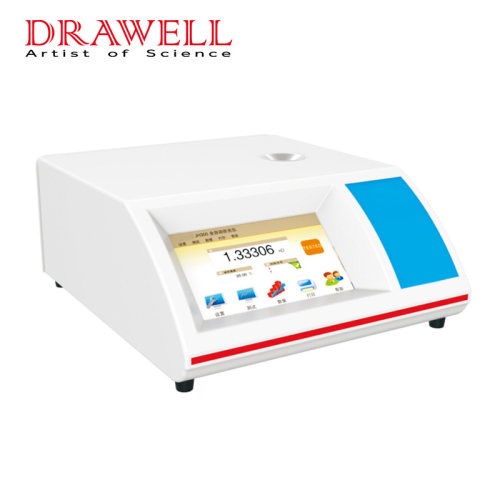
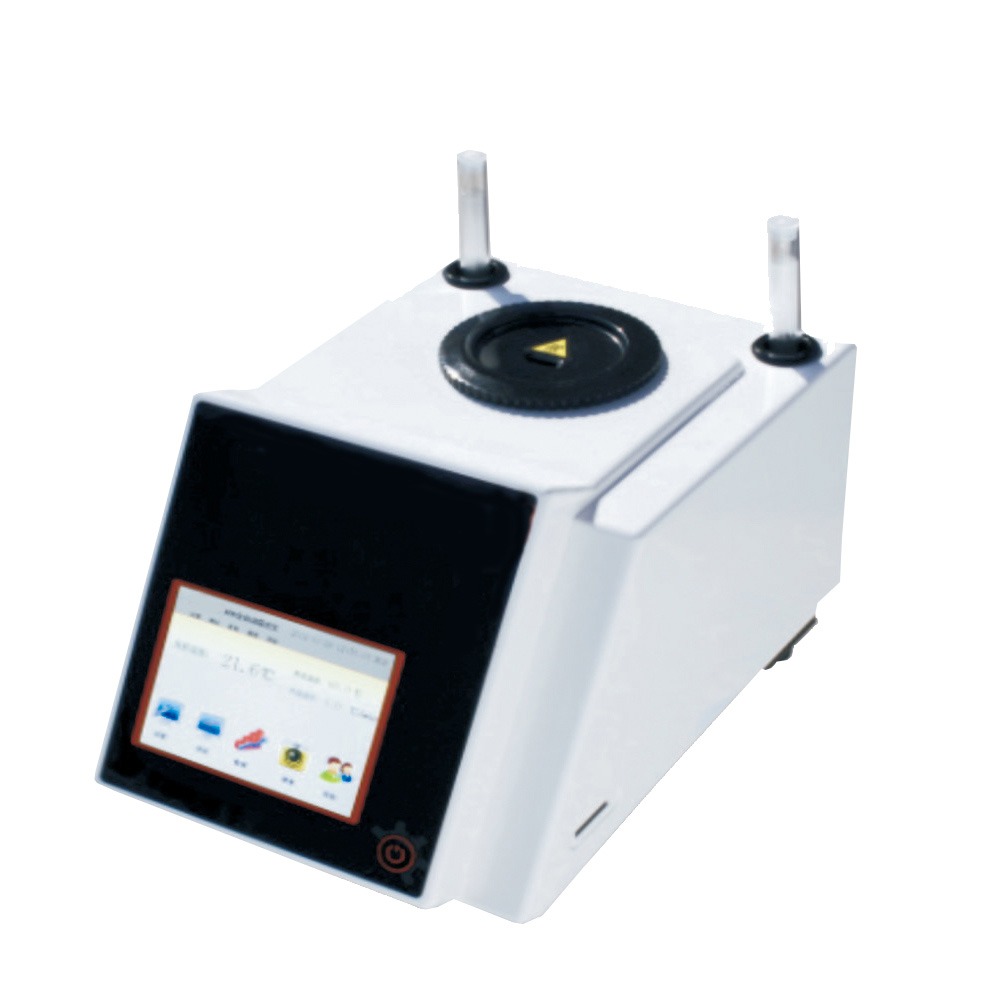
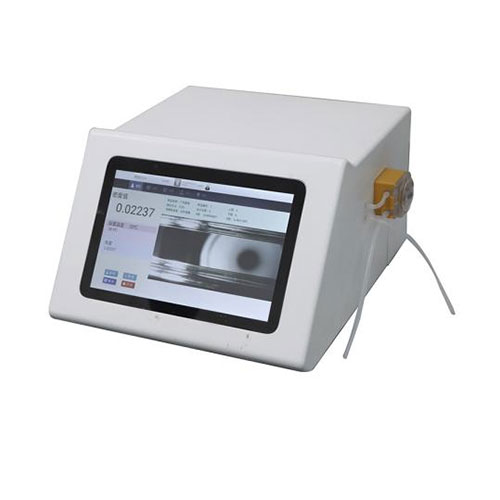
The polarimeters are precision instruments used to measure the optical activity of substances that rotate the plane of polarized light. This property is characteristic of chiral molecules, such as sugars, amino acids, and many pharmaceutical compounds. Drawell polarimeters offer high accuracy and sensitivity, making them valuable tools for quality control, research, and analysis in industries like food and beverage, pharmaceuticals, and chemical manufacturing.
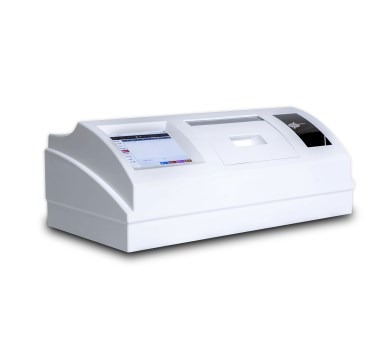
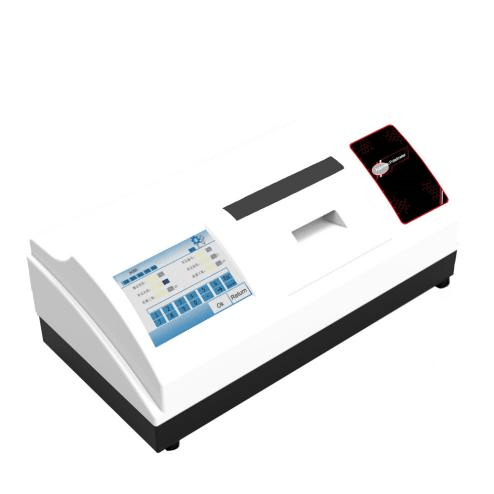
DigiPol Automatic Polarimeter
• Measuring Range: ±90°
• Display: 8/10-inch touch
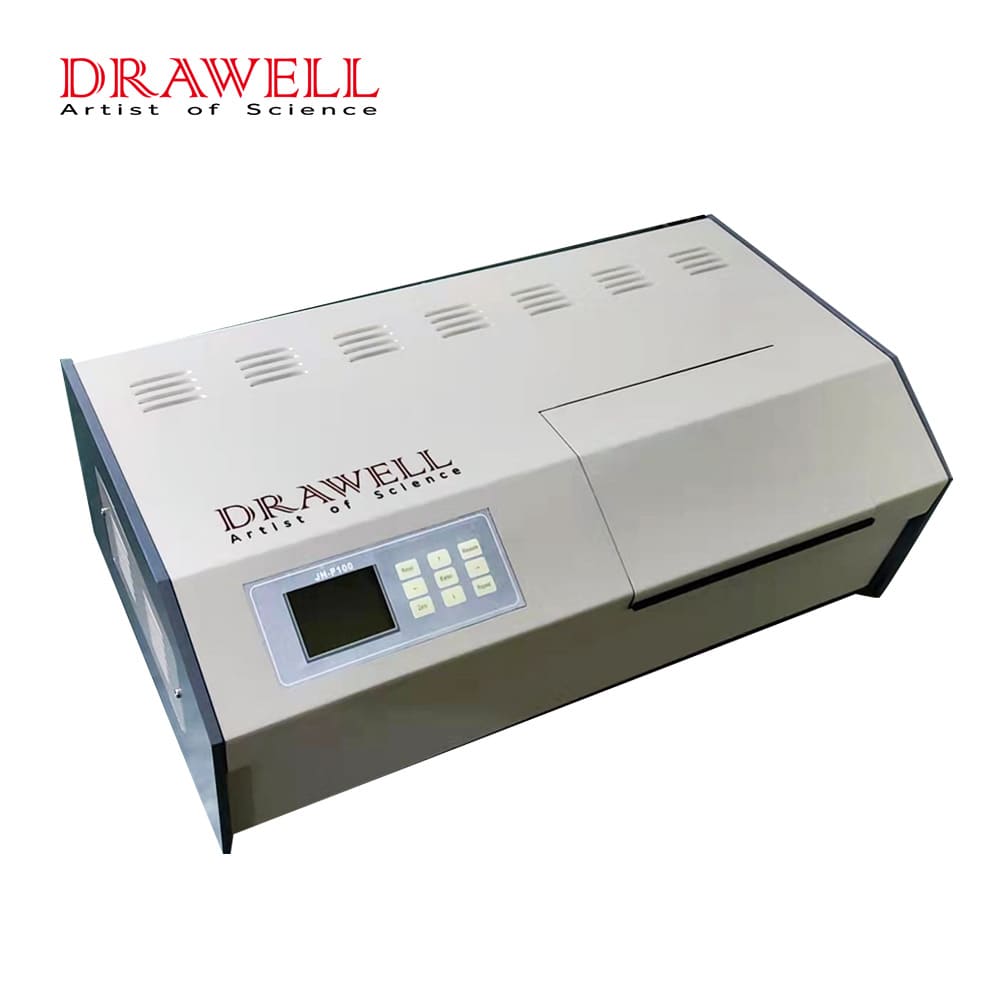
Automatic Polarimeter Series JH-P
• Measuring Range: ±45°/±90°
• Display: LED/ 7- inch touch screen
Features of Polarimeter
- Built-in Parr(Peltier) precise temperature control system;
- Highly integrated, fully automated, and easy to operate;
- Wide scope of the measurement;
- Precise temperature control system;
- Low cost of analysis.
- There are rotation/specific curl/concentration/sugar degree and custom mode;
- LED cold light source instead of the traditional sodium light lamp and halogen tungsten lamp;
- Compliance with 21CFR Part 1 audit trail, pharmacopeia, and electronic signature;
- Support network printing, support data statistical retrieval;
- Multi-level authority management, authority can be freely configured;
- Different types of display screens, user-friendly operation interface;
- The system comes with an automatic calibration system;
- Comply with GLP GMP certification.
Application Areas
Polarimeters are widely used in various fields such as medicine, food, organic chemical industry, such as:
- Food: production process control of sugar, monosodium glutamate, soy sauce, etc., and inspection of finished products, determination of sugar content in food.
- Health Services: Analysis of Clinical Diabetes in Hospitals.
- Petroleum: Mineral oil analysis, monitoring of petroleum fermentation process.
- Fragrance: Analysis of essential oils.
- Agriculture: Analysis of ingredients such as agricultural antibiotics, household hormones, microbial pesticides, and starch content of agricultural products.
- Medicine: Analysis of antibiotics, vitamins, glucose, and other drugs, pharmacological research of Chinese herbal medicine.

How to Choose The Right Polarimeter?
- How to choose the Measurement Mode?
Our polarimeters have four modes: optical rotation, specific rotation, concentration, and sugar content. But our polarimeters in the DigiPol-P series also support custom mode. - What is the advantage of the custom mode?
The more modes there are, the more preset modes can be directly selected during testing, saving time and effort. - What is the display mode of Drawell‘s polarimeters?
JH-P series: JH-P100 and JH-P200 are LED screens, and JH-P300 and JH-P400 are 7- inch-sized TFT Touch screens.
DigiPol-P series: DigiPol-P610 and DigiPol-P630 are 8-inch Touch Screens, and DigiPol-P910 and DigiPol-P930 are 10-inch Touch Screens. - If I need the Temperature Control Mode, which one I can choose?
You can choose JH-P300, JH-P400, and all DigiPol-P series models. These models are all built-in Peltier. - Which model I can choose if I need User Management?
DigiPol-P series.
DigiPol-P610 and DigiPol-P630 can create three-tier management. DigiPol-P910 and DigiPol-P930 can create four-tier management or more.
Polarimeter Display


How To Measure The Optical Rotation of A Sample?

- Preheating: Turn on the instrument to preheat and stabilize the light source.
- Zeroing: Fill a sample tube with pure solvent (such as water or ethanol) and use this as the zero point.
- Measurement: Pour the sample solution into the sample tube, clean the tube walls, and insert it into the instrument. Read the optical rotation (α).
- Calculation: Use the following specific rotation formula: [α]²_D = (100× α) / (L×C)
- [α]²_D: Represents the specific rotation at 20°C and the D line of a sodium lamp (589.3 nm).
- α: Measured optical rotation (unit: degrees).
- L: Length of the sample tube (unit: dm).
- C: Sample concentration (unit: g/100mL, meaning grams of sample per 100mL of solution).
What Factors Affect Polarimeter Measurements?
- Sample purity: Impurities can distort readings.
- Temperature: Optical rotation varies with temperature, so control is important.
- Wavelength of light: Sodium D-line (589 nm) is commonly used.
- Concentration and path length: Directly influence rotation angle.
How To Improve The Accuracy Of Measuring Sugar Concentration?
- Use clarifying agents to remove color and turbidity before measurement.
- Choose a saccharimeter-type Polarimeter designed for sugar testing.
- Use the correct International Sugar Scale (°Z) instead of degrees when reporting results.
- For high-throughput labs, invest in an automatic Polarimeter with sample changer to reduce manual error. Drawell can provide it.
What’s The Difference Between Polarimeter and Refractometer?
Both instruments are used in laboratory, food, beverage, and chemical industries, but for different analytical purposes.
- Polarimeters: Measure the rotation angle of plane-polarized light in a material and are particularly suitable for measuring solutions containing optically active substances.
- Refractometers: Measure the refractive index and dispersion of materials, indicating purity, sugar concentration, or solvent composition. They can measure transparent or translucent liquids and solids.
Why Choose US?
One-Station Shopping
“Multiple suppliers” have always been an issue in the procurement process. Drawell as a one-stop laboratory equipment and scientific instruments supplier, can perfectly solve this problem. In addition to manufacturing our own equipment, we also represent other laboratory equipment. Our product lines are rich and diverse at competitive prices. Provide one-stop service to customers.
Customer-centric Services
User Training – Training by Drawell skilled engineers about installation, debug tests, technical services, etc. It can happen in our factory in China, or at the site in the customers’ country. Cost depends on where and when the training happens.
Online Support
To discuss the problem and get it resolved, online chats, real-time video calls, and remote guidance. For the after-sales stage, our online technical guidance is free and ready forever.
100% Quality Guarantee Policy
1 year free official warranty, including repairing quality-damaged parts, and offering replacements of selected parts (shipping cost is extra). 5% of the product price is charged for extending the warranty before the end of the official warranty.